

Are Thick Frame Glasses in Style? Yes, With One Condition
Your thin wire frames were fine for years, then a chunky pair walked past you on the tram and you started wondering.
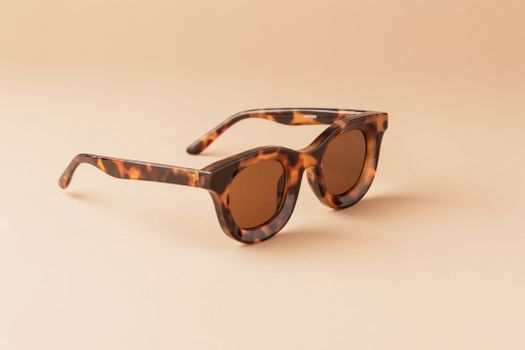
Photo by Amar Preciado / Pexels
Yes, thick frame glasses are in style in 2026, provided the thickness looks deliberate. That means a visible rim of roughly 5 mm or more in acetate, a clean shape and a size that suits your face. Chunky works. Chunky by accident, in a dated or oversized shape, does not.
Are thick frame glasses in style in 2026?
Yes, thick frames are current, and they have been for several seasons. The mood has moved away from wire-thin minimalism towards frames that read as a deliberate accessory: bold acetate rims, rounded-square and soft rectangular shapes, tortoiseshell, black and milky neutrals. What keeps them modern is restraint in shape. A thick rim on a simple geometry looks confident. A thick rim on an exaggerated shape, such as a huge square with a heavy brow bar, starts to look like a costume. Heavy black acetate has also been in and out of fashion since the 1950s, so it never fully leaves, it only changes proportions. Today's version is usually slightly smaller in lens width and rounder at the corners than the early-2010s look. If your old thick pair feels dated, the thickness is rarely the problem. The proportions are.
Signs that a thick frame looks current rather than retro:
- Softened corners instead of sharp 90-degree angles
- A lens width that leaves your cheeks clear of the bottom rim
- Colour with some depth, such as layered tortoiseshell, smoky grey or a translucent tone
- Temples that taper towards the hinge rather than staying blocky all the way back
Shop the frames in this guide


What counts as a thick frame, and which types look current?
A thick frame has a visible rim of roughly 5 mm or more, measured on the front from the lens edge to the outer edge of the frame. Under about 3 mm reads as slim, and the space in between is medium. Thickness comes mostly from acetate, a cellulose-based plastic cut from sheets several millimetres deep, which is why chunky frames are almost always acetate rather than metal. There are two dimensions to it, and people forget the second: the rim width you see from the front, and the depth you see from the side. A frame can be wide at the front but shallow in profile, which looks lighter, or deep through the temples, which looks like a block. For a modern look, front rim width matters most, and temples that taper towards the hinge stop the whole thing feeling heavy.
| Thick style | Why it works now | Watch out for |
|---|---|---|
| Rounded square, chunky acetate | Flattering on most faces, easy to wear daily | Too wide a lens makes it look oversized |
| Thick round | Soft, slightly academic, good on angular faces | Very small rounds can feel costume-like |
| Browline with a heavy top bar | Frames the brows, lighter lower rim keeps it balanced | A thick bar on a low brow can crowd the eyes |
| Thick transparent or translucent | Chunky look without the visual weight of black | Scratches show more on clear acetate |
| Classic black rectangle | Reliable, easy to dress up or down | Sharp corners and a deep rim can look severe |
Who suits thick frames, and how do you get the size right?
Thick frames suit most faces if the size is right, and size is where they usually go wrong. A heavy rim adds visual weight, so the frame needs less lens width than a thin one to make the same impression. Check the three numbers printed inside the temple of your current pair, for example 51-18-140 (lens width, bridge width and temple length, all in mm). If your thin pair is 52 mm wide in the lens, try 49 to 51 mm in a chunky shape. The outer edge of the frame should sit roughly level with the widest part of your face, not stick out past it. Narrow faces and small features can be overwhelmed by a deep rim, so go for softer corners and a lighter colour such as tortoiseshell or a translucent tone. Broader faces and stronger features carry black and bolder shapes with ease.
Three quick checks in a mirror or on a product photo:
- Your eyebrows should stay visible above the frame, not disappear behind it.
- Your cheeks should not touch the bottom rim when you smile.
- The temples should sit against your head without pressing behind the ears.
One more point: thick acetate frames are less adjustable at the nose than metal ones with silicone pads. If you have a low nose bridge, pay extra attention to the bridge width, because that is the number that decides whether the frame sits or slides.
Do thick frames work with strong prescriptions?
Yes, and often better than thin metal frames. A thick acetate rim hides the lens edge, which is the part that makes a strong minus prescription look like the bottom of a bottle. With a rim of 5 mm or more, a 1.61 or 1.67 index lens is usually enough to keep the edge tidy, where a rimless or thin metal frame would show it and might push you towards 1.74. For strong plus lenses the centre is thick rather than the edge, so a deeper rim gives the lens a secure seat and the bulge is less noticeable from the side. Weight is the trade-off. A chunky acetate frame is heavier than a titanium one that can come in under 15 g, and the lenses add to it. If the frame will sit on your nose all day, choose a higher index such as 1.67 to keep the lenses themselves lighter.
Here is the insight most shopping guides skip: a thick frame can let you choose a lower lens index, which is where you may save money. Do not automatically upgrade to the thinnest lens. Check the frame's rim width first, then decide.
Progressive lenses need one extra check. They need enough lens height to fit the reading zone, so very shallow, wide rectangles can be a poor match. Look at the lens height in the product details, and choose a rounded-square or round shape if you wear varifocals. An anti-reflective coating is also worth adding, as thicker lenses tend to show reflections more clearly.
How do you stop thick frames looking dated?
Keep the thickness and edit everything else. Three adjustments do most of the work: a smaller lens, softer corners and a colour with some depth. A thick black frame at 54 mm with square corners looks like a decade ago. The same rim width at 50 mm with rounded corners looks like this season. Then look at the details around the frame. Thick glasses draw attention to the upper face, so a simple hairstyle and clean eyebrows let the frame do the talking. Avoid pairing them with other heavy elements, such as a chunky chain or a large hat, all at once. One bold feature at a time is the rule that stops an outfit from looking over-styled. Also check that the lenses are clean and well centred, because a thick frame with smudged or badly aligned lenses looks worse than a thin one.
- Measure your current pair. Read the numbers inside the temple and write them down.
- Go down 1 to 3 mm in lens width compared with your thin frames.
- Pick rounded corners unless your face is very soft and you want contrast.
- Choose a colour with layers: tortoiseshell, smoky grey, deep green or a translucent tone.
- Try before you commit with a front-facing photo. If your eyebrows vanish, size down.
Where can you buy thick frame glasses with prescription lenses online?
You can order them directly from Lensdy, which carries 200+ frame styles in acetate, metal, titanium, rimless and flexible memory metal, with affordable prescription lenses fitted to your details. For thick styles, browse the Prescription Glasses collection and filter by material to find the acetate pairs. Then compare a few shapes side by side, for example Delaware, Cannes, Pol White and Crystal, checking the lens width and bridge numbers on each page against the pair you wear now. Lens options include single vision, progressive, blue light filtering, photochromic and anti-reflective coating, with indices of 1.56, 1.61, 1.67 and 1.74. Most orders arrive within 1 to 2 weeks, whether you live in Brno, Plzeň or a village outside Ostrava, and shipping is free on orders over €59.
Frequently Asked Questions
Are thick frame glasses in style for both men and women?
Yes. Chunky acetate has no gender. The difference is in the shapes: rounded squares, thick rounds and classic rectangles are worn by everyone, while cat-eye and butterfly shapes lean more feminine. Pick the shape by your face and the size by the numbers inside the temple.
Do thick frames make your eyes look smaller?
They can if the frame is too big or the rim hides your eyebrows. A thick frame adds visual weight, so if your eyes seem to shrink, go down 1 to 3 mm in lens width, choose a lighter or translucent colour, and make sure the top rim sits just under your brow.
Are thick frames heavier and less comfortable?
Often a little heavier than titanium or thin metal, yes. Comfort depends more on the fit than on the weight alone: a correct bridge width, a temple length that sits on the ear without pressing and a lens in a higher index to keep the total weight down. If you have a strong prescription, 1.67 helps.
Can I get thick frames with progressive or blue light lenses?
Yes. Thick acetate frames take progressive, blue light filtering, photochromic and anti-reflective lenses. For progressives, check that the lens height is generous enough, and ask your optician if you are unsure which fitting height suits your prescription.
Ready to try a thicker frame?
Before you order, write down the three numbers inside your current temple, then take 1 to 3 mm off the lens width for a chunky pair. Then head to lensdy.com, choose a frame and add your prescription lenses. free shipping on orders over €59 applies on orders over €59.