

7 Rimless Glasses Mistakes That Ruin Your Investment
Quick answer
Common rimless glasses mistakes can destroy your investment by causing lens damage, poor fit, and constant repairs. The most critical error is choosing standard plastic lenses, which crack under the drilling stress required for rimless mounting, while polycarbonate scratches easily when fully exposed.
High-index 1.67 or 1.74 lens materials provide the necessary durability and minimal thickness essential for rimless frames. Never use below 1.61 index for prescriptions over ±2.00 diopters, as thick edges create stress on mounting points. Lens shape selection is equally crucial – sharp corners and extreme curves like cat-eye points create dangerous weak spots where cracks start, while oval and round shapes distribute stress optimally. Hardware quality matters significantly, as cheap screws loosen constantly while professional-grade compression sleeves and titanium screws maintain proper tension. Bridge width must span exactly two-thirds of lens width for optimal stress distribution, and temple drilling angles require precision based on individual face shape rather than generic templates.
Rimless prescription glasses represent the pinnacle of minimalist eyewear design, but they're also the most unforgiving when it comes to mistakes. Unlike full-rim frames that protect and conceal, rimless glasses expose every flaw in lens quality, fitting, and maintenance. After fitting thousands of rimless frames, opticians consistently see the same costly errors that turn a premium investment into a frustrating experience.
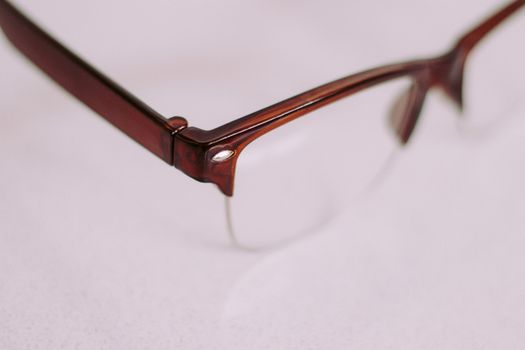
Photo by Bruchin Noeka / Pexels
The appeal is obvious: rimless glasses offer an unobstructed field of vision, virtually disappear on your face, and work with any outfit. However, their delicate construction demands specific knowledge that most buyers never receive. These seven mistakes can cost you hundreds in replacements and repairs.
Mistake #1: Choosing the Wrong Lens Material
The biggest misconception about rimless glasses is that any lens material will work. Standard plastic lenses crack under the drilling stress required for rimless mounting. The lens edges bear all the frame's weight without rim protection, creating stress points that regular CR-39 plastic cannot handle.
Polycarbonate lenses offer impact resistance but tend to scratch easily on rimless frames where the lens surface is completely exposed. The optimal choice is high-index 1.67 or 1.74 material, which provides the necessary durability while keeping lens thickness minimal – crucial since thick lens edges look particularly ungainly on rimless frames.
Professional tip: Never go below 1.61 index for prescriptions over ±2.00 diopters on rimless frames. The thick edges will dominate your face and stress the mounting points.
Shop the frames in this guide


Mistake #2: Ignoring Lens Shape Limitations
Rimless frames cannot accommodate every lens shape that full-rim frames can. Sharp corners and extreme curves create weak points where cracks typically start. The drilling process removes material, so shapes with narrow sections – like cat-eye points or rectangular corners – concentrate stress dangerously.
| Lens Shape | Durability Rating | Best For |
|---|---|---|
| Oval | Excellent | All prescriptions |
| Round | Excellent | Strong prescriptions |
| Modified Rectangle | Good | Light prescriptions only |
| Sharp Cat-eye | Poor | Not recommended |
The RoseBow exemplifies ideal rimless lens shaping – gently curved edges that distribute stress evenly while maintaining contemporary style.
Mistake #3: Improper Bridge and Temple Attachment
Rimless glasses attach to your lenses through precise drilling, but the hardware quality varies dramatically. Cheap rimless frames use basic screws that loosen constantly and strip easily. Professional-grade frames employ specialized compression sleeves and titanium screws that maintain tension without over-tightening.
The bridge attachment is particularly critical. A bridge that's too narrow for your lens shape creates torque during normal wear. Too wide, and the lenses flex independently, weakening the drill holes. The bridge should span exactly two-thirds of your lens width for optimal stress distribution.
Temple attachments require even more precision. The drilling angle must account for your face shape and ear position. Many online retailers use generic drilling templates, resulting in frames that sit crooked or apply uneven pressure.
Mistake #4: Overlooking Progressive Lens Compatibility
Progressive lenses in rimless frames present unique challenges that most buyers discover too late. Without rim guidance, your eyes must locate the reading zone by lens landmarks alone. The transition zones become visible as slight thickness variations at the lens edges – acceptable in full-rim frames but obvious in rimless designs.
Corridor width becomes critical. Narrow progressive corridors that work fine in full-rim frames feel restrictive in rimless glasses because you're more aware of the lens boundaries. Always specify wide-corridor progressives for rimless applications, even if it means a slightly larger lens size.
The fitting height requirement is also more stringent. Standard progressive fitting allows 2-3mm variation, but rimless frames need precision within 1mm for optimal performance.
Mistake #5: Neglecting Anti-Reflective Coating Quality
Anti-reflective coating isn't optional on rimless glasses – it's essential. Without rims to hide lens edges, any reflection draws attention away from your eyes. However, not all AR coatings are created equal, and rimless glasses punish poor coating choices.
Budget AR coatings often have a slight tint that becomes visible at lens edges. They also attract smudges more readily, and cleaning them on rimless frames risks loosening the hardware. Premium coatings like Crizal or equivalent provide true clarity while resisting smudges and scratches.
Hydrophobic coating is non-negotiable for rimless frames. Water spots that barely register on full-rim glasses become obvious distractions on exposed rimless lenses.
Mistake #6: Improper Cleaning and Maintenance
Rimless glasses require different cleaning techniques than framed glasses. The mounting hardware creates crevices where debris accumulates, and the exposed lens edges are vulnerable to chipping during aggressive cleaning.
Never clean rimless glasses with paper towels or tissues – the wood fibers can scratch exposed edges. Avoid pushing on the lenses during cleaning; instead, hold the bridge or temples to prevent flexing the lens-to-hardware connection.
Regular maintenance includes checking screw tightness monthly. Unlike full-rim frames where loose screws are immediately obvious, rimless hardware can loosen gradually without visible signs until the lens falls out.
- Use only microfiber cloths for cleaning
- Clean from lens center outward to edges
- Support the frame at hardware points, never push on lenses
- Check screw tightness monthly with proper eyewear tools
- Store in hard cases – soft pouches don't protect exposed edges
Mistake #7: Buying Without Professional Measurement
The most expensive mistake is ordering rimless glasses without precise measurements. Pupillary distance, fitting height, pantoscopic tilt, and wrap angle all affect rimless performance more than framed glasses.
Generic PD measurements don't account for the specific lens shape and size. Rimless glasses require monocular PD measurements – separate distances for each eye – because any asymmetry becomes optically and cosmetically obvious.
Vertex distance (lens-to-eye distance) is equally critical. Rimless frames typically sit 2-3mm closer to your eyes than full-rim frames, which affects the effective prescription strength. A prescription calculated for 12mm vertex distance will feel different at 10mm, potentially causing eyestrain or blurred vision.
Many opticians don't adjust prescriptions for this vertex distance change, assuming customers will notice and return for adjustment. However, the symptoms – mild eyestrain, slightly soft distance vision – often develop gradually and get attributed to other causes.
Choosing Quality Rimless Frames
Not all rimless frames are engineered equally. Quality indicators include titanium hardware (never plastic or cheap alloy), precision-drilled mounting holes with reinforcement sleeves, and adjustable nose pads that don't rely solely on lens mounting for support.
Memory metal temples like those on the Memovue White provide flexibility that reduces stress on lens mounting points. The frame should feel substantial enough to support your prescription weight while remaining comfortable for extended wear.
Bridge design matters significantly. Single-piece bridges distribute weight better than multi-component designs, while adjustable bridges allow fine-tuning after manufacturing.
Understanding Rimless Prescription Limits
Certain prescriptions don't work well with rimless designs, regardless of lens material or frame quality. High minus prescriptions (over -6.00) create thick lens edges that stress mounting points. High plus prescriptions (over +4.00) result in thick lens centers that make the frames front-heavy.
Astigmatism over 2.00 diopters can cause lens distortion visible at the edges of rimless lenses. Strong prism corrections are generally incompatible with rimless designs due to the thickness variations they create.
Progressive prescriptions with adds over +2.50 may show visible thickness changes at the lens edges, though this varies by frame size and lens material.
Professional Fitting vs DIY Attempts
Unlike full-rim frames that offer some adjustment forgiveness, rimless glasses require precise initial fitting. The hardware cannot accommodate significant changes without re-drilling the lenses – essentially starting over.
Nose pad adjustment on rimless frames affects more than comfort; it changes the optical center alignment and can induce unwanted prism effects. Temple adjustments must account for the direct lens mounting, making DIY adjustments risky.
Professional fitting includes verifying that the drill holes align perfectly with the frame geometry before final assembly. This prevents the stress concentrations that lead to cracking.
Long-term Durability Expectations
Well-made rimless glasses can last 3-5 years with proper care, comparable to quality full-rim frames. However, they're less forgiving of accidents and require more careful handling throughout their lifespan.
The most common failure modes are lens cracking at drill holes (usually from impact or over-tightening), hardware corrosion (from exposure to skin oils and cleaning products), and nose pad wear (since they can't be hidden behind rims).
Budget rimless frames often fail within 6-12 months due to inferior hardware and poor drilling quality. The initial savings disappear quickly when replacements become necessary.
Why Choose Lensdy for Rimless Glasses
At Lensdy, we understand that rimless prescription glasses demand precision engineering and quality materials. Our rimless glasses collection features over 200+ carefully selected frame styles, each designed to work seamlessly with our advanced lens technologies.
We use only high-grade titanium hardware and precision drilling techniques that ensure long-term durability. Our lens options include high-index materials (1.56, 1.61, 1.67, 1.74) specifically chosen for rimless compatibility, with premium anti-reflective coatings that maintain clarity while resisting smudges and scratches.
Every rimless frame comes with detailed fitting instructions and professional-grade adjustment tools. Our prescription lenses start from €29, and we include free shipping on orders over €59 across Europe. Orders typically arrive within 1–2 weeks, backed by our London-based customer service team at 128 City Road, EC1V 2NX.
Whether you choose the elegant Amethyst or the sophisticated Liberty Black, you're investing in eyewear designed to avoid the common pitfalls that plague inferior rimless glasses.
Frequently Asked Questions
Can rimless glasses handle strong prescriptions?
Rimless glasses work best with prescriptions between -4.00 and +3.00 diopters. Stronger prescriptions require careful lens material selection and may need modified frame designs to handle the additional weight and thickness.
How often should I tighten the screws on rimless glasses?
Check screw tightness monthly using proper eyewear tools. Over-tightening causes more damage than under-tightening, so turn screws only until snug. If screws loosen frequently, the threading may be damaged and require professional attention.
Are rimless glasses more expensive to repair?
Yes, repairs often require re-drilling lenses or complete lens replacement since the mounting holes cannot be relocated. This makes prevention through proper care and quality initial construction essential.
Do rimless glasses work with all face shapes?
Rimless glasses suit most face shapes but require careful lens size and shape selection. Round faces benefit from slightly angular lens shapes, while square faces look better with curved lens edges. The lack of frame boundaries makes proportion more critical than with full-rim styles.
Ready to experience perfectly fitted rimless prescription glasses? Browse our expertly curated selection at lensdy.com and discover why quality matters in rimless eyewear.