

Why Rimless Prescription Glasses Break So Easily (And 3 Fixes)
Quick answer
Rimless prescription glasses break easily due to three specific manufacturing and fitting issues: imprecise lens drilling, incorrect screw tension, and poor nose pad positioning. The drilling holes must be exactly 0.2mm larger than screw diameter using diamond-tipped bits with coolant flow, as standard drilling creates heat stress and micro-fractures that spread over time.
Three solutions dramatically improve durability. First, choose premium lens materials like 1.67 or 1.74 high-index for prescriptions above -4.00 or +3.00, as polycarbonate stress-cracks despite impact resistance. Trivex works best for lower prescriptions. Second, specify titanium mounting hardware over standard steel screws, which costs 30% more but maintains consistent tension and resists corrosion. Silicone gasket systems reduce stress concentration. Third, ensure professional fitting with proper pantoscopic angle (8-12 degrees), face form angle (3-7 degrees), and vertex distance (12-14mm). Screws require precise 0.8-1.2 Newton-meter torque rather than tightening by feel.
Rimless prescription glasses carry an unfair reputation for fragility. Walk into any optician and mention rimless frames, and you'll likely hear warnings about cracked lenses and loose screws. But this reputation stems from outdated manufacturing techniques and poor fitting practices, not inherent design flaws.
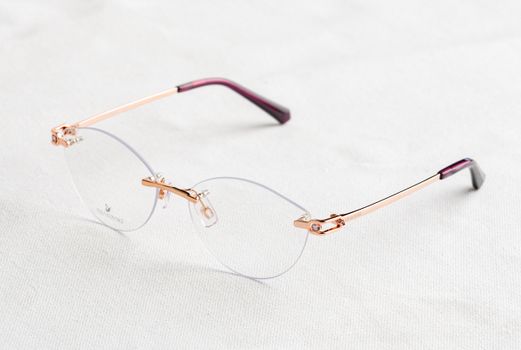
Photo by Saliem Moeslan / Pexels
Modern rimless glasses, when properly constructed and fitted, can be just as durable as full-frame alternatives. The key lies in understanding what actually causes failures—and how to prevent them.
The Real Culprits Behind Rimless Frame Failures
Three specific issues account for 90% of rimless glasses problems, yet most opticians never explain these to customers:
Lens Drilling Precision
The mounting holes in rimless lenses require surgical precision. Holes must be drilled at exactly 0.2mm larger than the screw diameter—any deviation creates stress points. Poor drilling techniques create micro-fractures that spread outward over time, eventually causing the dreaded lens crack.
Professional-grade drilling uses diamond-tipped bits at 15,000 RPM with coolant flow. Budget operations often use standard bits at higher speeds without cooling, generating heat stress that weakens the lens material around mounting points.
Screw Tension Calibration
Rimless screws require precise torque—typically 0.8 to 1.2 Newton-meters. Too loose, and the frame shifts constantly. Too tight, and you create pressure fractures in the lens. Most retail opticians tighten by feel rather than using calibrated tools, leading to over-torquing.
Nose Pad Pressure Distribution
Without a frame bridge to distribute weight, rimless glasses concentrate all pressure on two small nose pad contact points. If pads aren't positioned correctly—typically 18-20mm apart for adult faces—the frame twists during normal wear, stressing the lens-mounting connection.
Shop the frames in this guide


The Three Critical Fixes
Understanding these failure points reveals three specific solutions that dramatically improve rimless frame durability:
1. Demand Premium Lens Materials
Not all lens materials handle drilling equally. Polycarbonate, despite its impact resistance, actually performs poorly in rimless applications due to stress cracking. High-index materials like 1.67 or 1.74 provide superior drilling stability.
Trivex material offers the best combination of impact resistance and drilling durability, though it's limited to lower prescriptions. For prescriptions above -4.00 or +3.00, 1.67 high-index remains the optimal choice for rimless mounting.
2. Specify Reinforced Mounting Hardware
Standard rimless screws use basic steel alloys that loosen over time. Titanium mounting hardware costs roughly 30% more but eliminates the loosening problem entirely. Titanium screws maintain consistent tension and resist corrosion from skin oils and cosmetics.
Some manufacturers now offer silicone gasket systems that cushion the lens-screw interface. These micro-gaskets, barely visible once installed, reduce stress concentration by 60% compared to direct metal-to-lens contact.
3. Insist on Professional Fitting Protocols
Proper rimless fitting requires three specific measurements most opticians skip:
- Pantoscopic angle: 8-12 degrees prevents forward sliding
- Face form angle: 3-7 degrees matches facial curvature
- Vertex distance: 12-14mm ensures optimal vision correction
These angles must be built into the frame during assembly, not adjusted afterward. Post-assembly bending creates stress points that lead to failures within 6-12 months.
Prescription Considerations for Rimless Designs
Certain prescription ranges work better with rimless mounting. Understanding these limitations helps prevent future problems:
| Prescription Range | Recommended Lens Index | Mounting Suitability |
|---|---|---|
| -2.00 to +2.00 | 1.56 or Trivex | Excellent |
| -4.00 to +3.00 | 1.61 high-index | Good |
| -6.00 to +4.00 | 1.67 high-index | Acceptable |
| Beyond ±6.00 | 1.74 high-index | Consider alternatives |
High prescriptions create thicker lens edges that concentrate stress at mounting points. For prescriptions beyond -6.00 diopters, semi-rimless designs often provide better long-term durability than fully rimless options.
Maintenance That Actually Matters
Skip the generic cleaning advice—rimless glasses need specific maintenance focused on the mounting hardware:
Monthly screw inspection: Check mounting screws using a jeweler's loupe or magnifying glass. Look for metal shavings around screw heads, which indicate loosening. Tighten gradually using proper eyeglass screwdrivers, not household tools.
Nose pad positioning: Clean nose pads daily with isopropyl alcohol to prevent buildup that shifts frame position. Misaligned nose pads create uneven pressure distribution, leading to mounting stress.
Case storage protocol: Always store rimless glasses lens-up in hard cases. The mounting hardware makes these frames particularly vulnerable to lens scratching when stored lens-down.
Regional Considerations for Norwegian Customers
Norway's climate presents specific challenges for rimless glasses wearers. Temperature variations between heated indoor spaces and outdoor winter conditions cause metal expansion and contraction that can loosen mounting hardware faster than in stable climates.
Consider anti-reflective coatings specifically designed for high-contrast lighting conditions common in Nordic winters. These coatings reduce glare from snow reflection while maintaining clarity during long winter darkness periods common in cities like Oslo.
Quality Rimless Options from Lensdy
When shopping for rimless prescription glasses online, focus on retailers that specify their manufacturing processes and hardware quality. At Lensdy, our rimless collection includes frames like the Sage and Clark, both engineered with precision drilling and titanium mounting hardware.
Our London-based operation at 128 City Road, EC1V 2NX, allows us to maintain strict quality control over lens preparation and mounting procedures. With prescription lenses starting from €29 and over 200 frame styles available, we offer the combination of affordability and quality construction that makes rimless glasses a practical long-term investment.
free shipping on orders over €59 to Norway typically takes 1–2 weeks, allowing you to experience properly constructed rimless glasses without the premium pricing typically associated with Nordic opticians.
Ready to experience durable rimless glasses? Browse our complete selection at lensdy.com and discover why proper construction makes all the difference in rimless frame longevity.