

Tinted prescription glasses for everyday wear: go light
Most people who want a bit of colour in their daily glasses end up ordering a tint that is too dark for the office and too light for the beach.
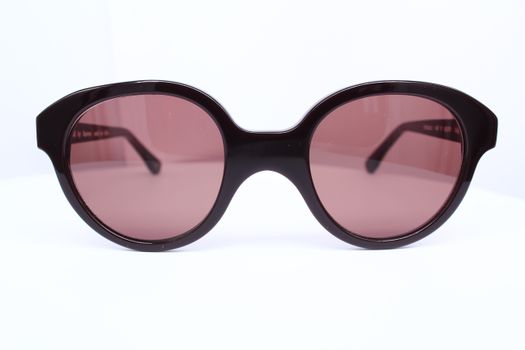
Photo by Fitnoz Eyewear / Pexels
For everyday wear, choose a light tint (sunglass category 0 or 1) in grey, brown or a soft neutral, ideally with an anti-reflective coating. It stays comfortable indoors, takes the edge off bright daylight and looks like ordinary glasses. For full sun, add photochromic lenses or a sun clip instead of making the tint darker.
What counts as a light tint for everyday glasses?
A light tint is a lens in category 0 or 1 on the EN ISO 12312-1 scale, which runs from 0 to 4. Category 0 barely darkens the view, category 1 softens bright daylight, and both are comfortable indoors. Categories 2 and 3 are proper sunglass territory, and category 4 is so dark it is not meant for driving at all. On plastic lenses the colour is usually dye absorbed into the lens material, so the same lens can be made lighter or darker depending on how long it sits in the dye. That is why a tint is easy to overdo: the colour looks pale on a small sample card but much stronger once it fills the whole lens in front of your eyes. If you want to wear the glasses from a morning commute to an evening meal, stay in the bottom two categories and let a second pair or a clip handle the sun.
Quick rule of thumb: if you can clearly see a friend's eye colour through your lenses indoors, the tint is light enough for all-day wear. If you cannot, it belongs outside.
Shop the frames in this guide


Which tint colour works best day to day?
Grey is the safest answer, brown is our pick if you want warmth, and pale rose or yellow suit people who mainly want a gentle look indoors. Grey reduces brightness without shifting colours, so a red jumper stays red. Brown and amber add contrast, which makes edges look crisper on overcast days. Green sits between the two and has a classic look. The colour matters more than people expect because your brain adjusts to it within minutes, then notices the shift every time you take the glasses off. A strong colour cast is tiring to live with; a neutral one disappears. Think about what you look at most: a screen, a grey street, a sunny terrace. A tint that flatters a face in a mirror is not always the one that feels good at 4 pm.
| Tint colour | Best for | Watch out for |
|---|---|---|
| Grey | Neutral colour, general daily use | Slightly flat on dull, overcast days |
| Brown / amber | Contrast, grey weather, mixed lighting | Warm cast changes how you see skin tones and colour swatches |
| Green | Classic look, comfortable in bright light | Slight colour shift, fewer frame colours suit it |
| Pale rose or yellow | Light fashion tint, indoor and screen use | Noticeable colour cast if you work with colour |
Can you wear tinted glasses indoors and at a screen?
Yes, as long as the tint is very light. A category 0 lens is designed to be worn indoors, and a category 1 lens is usually fine in normal office or home lighting. Anything darker makes screens, stairwells and faces harder to read, and you will end up pushing the glasses onto your head every time you walk inside. The common mistake is choosing a tint to look good outdoors and then wearing it at a desk all day. A lens that is slightly too dark indoors makes you lean in and squint at small text, which is the opposite of what you wanted. Clean, bright rooms tolerate more tint than dim ones, so a café table in Linz in November asks for a lighter lens than a sunny balcony in July.
One thing often mixed up: blue light blocking lenses are not tinted lenses. They carry a filter that targets HEV/blue light, and may show a faint coloured reflection, but they are normally clear or almost clear. If you spend long days at a screen, you can combine a blue light filter with an anti-reflective coating, which removes much of the glare from overhead lights that a tint would only dim.
Are photochromic lenses better than a fixed tint?
For most people who wear one pair all day, yes. Photochromic lenses are clear or nearly clear indoors and darken when UV light hits them, then clear again in shade. A fixed tint is always the same darkness, so you are choosing a compromise between indoor comfort and outdoor glare. Photochromics remove that compromise, and they need only one pair of glasses to cover a grey morning, a bright lunch break and the walk home. Their weak spot is the car: most car windscreens block much of the UV that triggers the darkening, so standard photochromic lenses often stay fairly light behind the glass. Temperature changes the behaviour too. In cold weather they tend to darken more deeply and fade back more slowly, which is something you will notice on a winter day in Graz when you step from a cold street into a warm shop.
- Pick photochromic if you want one pair for office, street and the occasional sunny walk.
- Pick a fixed light tint if you want a constant colour, say for style or a fixed comfort level indoors.
- Pick a sun clip or separate prescription sunglasses if you spend long periods in strong sun or behind a windscreen.
Do strong prescriptions change how a tint looks?
They do, and this is the detail most buyers miss. A uniform tint is absorbed through the thickness of the lens, so thicker parts look darker. In a strong minus prescription the edges are thick and the centre is thin, which means a tint can look like a dark rim around a pale middle. In a strong plus prescription the centre is thick, so the middle looks darker than the edge. A higher lens index reduces the difference by making the lens thinner. As a rough guide, 1.56 suits mild prescriptions, 1.61 covers the middle range, 1.67 suits strong prescriptions and 1.74 is the thinnest option for very strong ones. If your prescription is strong and you want a visible tint, going up an index usually gives a more even colour as well as a slimmer lens. Frame choice helps too: a smaller, rounder lens shape trims the thickest edge, so the tint stays more even.
Add an anti-reflective coating regardless. On a tinted lens it cuts the reflections of light bouncing off the back surface into your eye, and it makes the lens look cleaner to people talking to you.
Is it safe to drive in tinted prescription glasses?
A light tint is generally fine for daytime driving, a dark one is not suitable for night, and category 4 lenses are not meant for driving at all. Tint reduces the light reaching your eye, and at night or in a tunnel you need as much as you can get. That is the reason many people keep a clear pair in the glove box. If you drive often at dusk, ask your optician whether even a light tint is right for you, since individual night vision varies. Photochromic lenses add a wrinkle: they can be darker than expected when you leave a bright street for a covered car park, because they take time to clear. In cold weather the fade is slower still.
Practical habits that help: keep the lenses clean, because smears are far worse with a tint at night, and always keep a clear backup pair. For frequent drivers, a clear lens with an anti-reflective coating plus a separate sun option is usually the calmer choice.
How do you choose your tint in five steps?
Start with where you spend most of your waking hours, then pick the lightest option that solves your real problem. Most people who want a tint for daily wear are solving one of three things: glare outdoors, a look they like, or the need to avoid carrying two pairs. Each has a different answer. Glare points to photochromic lenses or a sun clip. A look points to a light fixed tint in grey, brown or a soft colour. Carrying two pairs points to photochromic or magnetic clip-on frames. The steps below take about ten minutes and avoid the usual regret of a lens that feels fine in the shop and wrong by Thursday.
- Write down where you wear glasses most: desk, street, car, outdoors.
- Choose the darkness: category 0 or 1 for all-day wear, anything darker as a separate pair or clip.
- Choose the colour: grey for neutral, brown for contrast and warmth, soft rose or yellow for a gentle style.
- Match the lens index to your prescription strength (1.56, 1.61, 1.67 or 1.74) so the tint stays even.
- Add an anti-reflective coating, and a blue light filter if screens fill your day.
Before you order, check the lens options on the product page for the combination you want, and ask your optician if you are unsure about driving or any eye condition.
Where can you get tinted prescription glasses for everyday wear?
You can build a sensible everyday setup at Lensdy without paying optician-counter prices. There are 200+ frame styles in acetate, metal, titanium, rimless and flexible memory metal, and affordable prescription lenses in single vision or progressive, with 1.56, 1.61, 1.67 and 1.74 indices, photochromic, blue light blocking and anti-reflective options. If you want one pair that handles bright days, photochromic lenses in a neutral frame such as Grace Black or Regal Silver are a good starting point. For a bolder look, Lava and Bomb Green are worth a look. If you prefer clear lenses most of the time, the Magneto 3-in-1 and Polyhedron 4-in-1 magnetic clip-on frames give you a prescription frame plus sun and blue light clips in one set, and there are around 18 prescription sunglasses styles for full sun.
Most orders arrive within 1-2 weeks, and shipping is free on orders over €59. Our tip: order your daily pair with the lightest tint or photochromic lens first, live with it for a week, then decide whether you need a darker pair at all. Browse the full Prescription Glasses collection at lensdy.com and start with the frame you would happily wear every day.