

Snow goggles useless in flat light? What night vision lenses do
You are halfway down a run you know well, and the slope has suddenly lost all its texture.
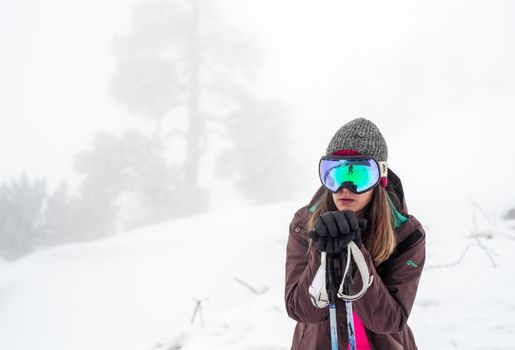
Photo by Emre Ozyemisci / Pexels
A night vision lens on snow goggles is a pale, usually yellow-tinted lens that lets more visible light through than a dark lens and raises contrast on white terrain. It makes bumps, ruts and edges easier to read in flat light, snowfall, dusk and floodlit evening skiing. It does not amplify light electronically.
What does a night vision lens actually do on snow goggles?
It does two jobs at once. First, it transmits more visible light than a dark or mirrored lens, so your eyes get enough information when the sky is heavy, the sun has dropped behind a ridge or you are skiing under floodlights. Second, the yellow or amber tint absorbs part of the short-wavelength blue end of the spectrum. Blue light scatters most in hazy air, which is why distant snow looks milky and washed out. Take some of it away and edges look crisper. There is no battery, no sensor and no image intensifier involved, so the name oversells it a little. Think of it as a contrast filter with a generous light gate. In a shop it looks like a pale yellow lens. On the hill, a shadowed mogul that used to be a grey smudge becomes a shape with an edge, and that edge is what your knees use to decide when to absorb.
What you will notice in practice:
- Small changes in the snow surface, such as ruts, ice patches and soft pillows, show up earlier.
- Tree lines and piste markers stand out against grey sky.
- Your eyes squint less in dull conditions, which matters by the fourth hour of skiing.
- Floodlit pistes look more even, with less harsh glare from individual lamps.
Shop the frames in this guide


Why does flat light make snow so hard to read?
Flat light happens when cloud, fog or falling snow spreads sunlight so evenly that shadows disappear. White ground meets white sky, the horizon fades, and your brain loses the depth cues it normally gets from light and shade. You can still see the snow, but you cannot tell whether the next metre is flat, dipping or rising. Skiers describe it as feeling the slope through their legs rather than seeing it, and that is exactly why people stumble over bumps they would spot easily on a sunny day. A dark lens makes this worse, because it cuts light that was already scarce and flattens what contrast remains. A night vision lens works from the other direction: it keeps the light and emphasises the faint tonal differences that are left. It cannot invent shadows that are not there, so the honest rule is to see better and still ski slower.
Our opinion: if you ski in a region with frequent cloud, such as Serra da Estrela on a damp day or any Alpine valley in winter, a pale lens earns its place in your bag.
When should you wear a night vision lens, and when should you not?
Wear it when light is low, diffused or artificial: overcast days, fog, snowfall, late afternoon and night skiing. Swap it for a darker lens on bright, sunny days, particularly above the tree line, where reflected glare is strongest. A pale lens in full sun means more squinting, more eye fatigue and less comfortable skiing. The rule is simple: if you would reach for sunglasses without thinking, you want a dark lens. If you would switch on a lamp indoors, you want the night vision lens. Mixed days are the tricky ones, with sun in the morning and cloud by two. Those are when carrying both lens types pays off, or when you choose the lens for the conditions you expect to spend most time in.
| Condition | Night vision lens | Dark or mirrored lens |
|---|---|---|
| Bright sun, blue sky | Too bright, tiring | Right choice |
| Overcast, flat light | Right choice | Flattens the view |
| Falling snow or fog | Right choice | Too dim |
| Dusk and early evening | Right choice | Too dim |
| Floodlit night skiing | Right choice | Not suitable |
| Bright spring slush | Too bright | Right choice |
For sunny days on and off the mountain, our Sunglasses collection covers the walk to the lift and the terrace afterwards.
Does a light tint mean less UV protection?
No. UV protection comes from the lens material and its coating, not from how dark the tint looks. A clear lens can block UV completely, and a dark lens with no UV filter can be harmful, because it makes your pupils open wider while still letting UV in. That matters on snow, where reflected UV and high altitude both add to your exposure. So a pale night vision lens should not be treated as a lens for avoiding UV, and it should not be dismissed as unprotected either. What you need to check is the stated UV rating on the product page. Look for wording such as 100% UV protection, and do not judge it by colour alone. The same applies to any pair of goggles you buy, from any shop. If a listing does not mention UV at all, treat that as a gap to question before you pay.
Which Alpine goggles come with a night vision lens?
The Alpine snow goggles series from Lensdy comes with a night vision lens included. The Alpine Blue snow goggles and the Alpine Pink snow goggles both include it, and the series also comes in Black. The colour refers to the frame and strap styling, so it changes how the goggles look on a grey day, not how the lens performs. Pick the colour you like and the fit that works with your helmet. Check each product page for exactly what is in the box and for the lens details. Timing is the one practical thing to plan. Most orders arrive within 1-2 weeks, so if you are flying out of Lisbon or Porto for a trip in December, order well ahead rather than the week before. free shipping on orders over €59 applies on orders over €59.
How do you get the most out of a night vision lens?
Treat the lens as a tool that needs the right setup. The best pale lens in the world fails if it is fogged, scratched or swapped too late. Most of the real-world problems come from habit rather than optics: waiting until you are already struggling in flat light, wiping a wet lens with a glove or using the goggles with a poor helmet fit. A few small habits fix nearly all of it. Here is what we would do:
- Decide before the lift. Flat light often arrives within minutes. Check the sky at the lift queue, not halfway down.
- Do not wipe the inside. Shake off moisture and let the goggles air-dry; rubbing damages anti-fog surfaces.
- Clean the outside with a microfibre cloth. Dry snow can scratch a lens if you rub it with a glove.
- Check the helmet gap. A gap above the goggles lets cold air in, and a tight fit blocks vents. Both cause fogging.
- Store them in a pouch. Loose in a rucksack, a pale lens shows scratches very quickly.
One more counterintuitive point: a pale lens is not the best choice in tree-lined runs on a sunny day. Strong light and dark shade alternate rapidly, and your eyes cannot keep up. A mid-tone lens handles that better.
Do you need different glasses off the slopes?
Yes, and it is worth planning. Goggles are for the mountain, but you spend a lot of a ski trip in lodges, on transfers and in the car at dusk. If you wear prescription glasses, you will want a pair you can rely on for all of that. Lensdy has 200+ frame styles, with affordable prescription lenses in single vision, progressive and several lens indices, from 1.56 up to 1.74 for stronger prescriptions. An anti-reflective coating helps with headlight glare on dark mountain roads, and photochromic lenses adjust between indoors and outdoors. If you want a simple, hard-wearing everyday frame, browse styles such as Surge or Tide and compare their fit and weight against what you already wear. Place the order early enough for delivery, since most orders arrive within 1-2 weeks, and remember that free shipping on orders over €59 applies on orders over €59.
Frequently Asked Questions
Can you use a night vision lens during the day?
Yes, on overcast or snowy days it is often the best choice. On bright, sunny days it will feel too bright, so a darker lens is more comfortable and reduces squinting.
Is a night vision lens the same as military night vision?
No. Military night vision uses electronics to amplify scarce light. A night vision lens on snow goggles is passive: it simply lets more light through and boosts contrast with its tint. You will not see in complete darkness.
Does a night vision lens stop goggles from fogging?
No. Fogging is condensation caused by warm, moist air meeting a cold lens. It depends on ventilation, helmet fit and anti-fog treatment, not on lens tint. Avoid wiping the inside of the lens.
Is a night vision lens good for night skiing?
Yes, that is one of its main uses. Floodlit pistes provide limited, uneven light, and a pale lens lets more of it through while keeping contrast clear. Lamps will still look bright, but glare is easier to manage than with a dark lens.
Ready for clearer runs?
If grey days have made you dread the second half of the afternoon, start with the Alpine series and check the product page for the lens details. Then browse the full range at lensdy.com for everyday prescription glasses and sunglasses to match. Before your trip, check the forecast for the week and pack your lens choice around it.