

5 Lens Index Mistakes That Make Your Glasses Unbearably Thick
Quick answer
Choosing the wrong lens index is the primary reason glasses become unnecessarily thick and heavy, regardless of your prescription strength. The lens index determines how efficiently the material bends light—higher numbers create thinner lenses for the same prescription power.
The most critical mistake is using standard 1.50 or 1.56 index lenses for prescriptions exceeding ±2.00 dioptres. For prescriptions between -2.00 and -4.00, upgrading to 1.61 index reduces thickness by approximately 20%, while 1.67 index cuts thickness by up to 35% for -4.00 to -6.00 prescriptions. Ultra-high 1.74 index lenses reduce edge thickness by nearly 45% for prescriptions above -6.00. However, higher-index materials reflect more light and are more brittle, requiring anti-reflective coatings and careful handling. Large frames over 54mm amplify thickness problems and warrant upgrading to the next index level, while smaller frames under 50mm can accommodate standard materials even with moderate prescriptions. Don't forget that astigmatism correction adds to total lens power—a -2.00 sphere with -1.50 cylinder behaves like a -3.50 prescription for thickness purposes.
Your prescription strength determines how thick your glasses will be, but choosing the wrong lens index can make them unnecessarily bulky and heavy. Most people default to standard 1.50 index lenses without realizing that higher-index options can dramatically reduce thickness and weight.
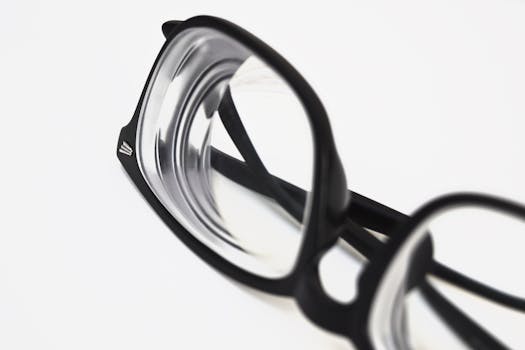
Photo by Marta Branco / Pexels
Lens index refers to how efficiently the material bends light. The higher the number, the thinner the lens becomes for the same prescription strength. Here are the five most common mistakes people make when selecting their lens index.
Mistake 1: Using Standard Index for High Prescriptions
The biggest error is sticking with standard 1.50 or 1.56 index lenses when your prescription exceeds ±2.00 dioptres. Beyond this threshold, standard materials create noticeably thick edges that affect both appearance and comfort.
For prescriptions between -2.00 and -4.00, 1.61 index lenses reduce thickness by approximately 20% compared to standard materials. For stronger prescriptions from -4.00 to -6.00, 1.67 index becomes essential, cutting thickness by up to 35%.
The most dramatic difference occurs with prescriptions above -6.00 dioptres, where 1.74 index lenses can reduce edge thickness by nearly 45%. This isn't just cosmetic—thinner lenses mean lighter glasses that won't slide down your nose or leave marks on your bridge.
Shop the frames in this guide


Mistake 2: Ignoring Frame Size Impact on Lens Thickness
Large frames amplify lens thickness problems, especially for myopic (nearsighted) prescriptions. The distance from the lens center to the frame edge determines the maximum thickness point.
A 52mm lens diameter with a -4.00 prescription might look acceptable in 1.61 index, but the same prescription in a 58mm oversized frame creates chunky edges that scream "thick glasses." For frames larger than 54mm, consider upgrading to the next index level regardless of your prescription strength.
Conversely, smaller frames under 50mm can often accommodate standard index materials even with moderate prescriptions around -3.00, making expensive high-index materials unnecessary.
Mistake 3: Assuming Higher Index Always Equals Better
High-index materials come with trade-offs that many don't consider. 1.74 index lenses reflect more light than standard materials, creating internal reflections and reducing optical clarity without proper anti-reflective coating.
Additionally, higher-index materials are more brittle and prone to chipping. For active lifestyles or children's glasses, the durability of 1.56 or 1.61 index materials often outweighs the thickness benefits of ultra-high index options.
Cost escalates significantly with each index jump. While 1.61 might add €30-50 to your lens cost, 1.74 can increase prices by €100-150 per pair. For prescriptions under -4.00, this premium rarely provides proportional benefits.
Mistake 4: Forgetting About Astigmatism Correction
Astigmatism adds cylinder power to your prescription, effectively increasing the total lens power and thickness. A -2.00 sphere with -1.50 cylinder behaves optically similar to a -3.50 prescription in terms of lens thickness.
Many people focus only on their sphere power when choosing lens index, forgetting that significant cylinder corrections (above -1.00) warrant upgrading to higher-index materials. This oversight leads to unexpectedly thick lenses that could have been avoided.
| Total Power (Sphere + Cylinder) | Recommended Index | Thickness Reduction |
|---|---|---|
| Up to ±2.00 | 1.56 | Standard |
| ±2.00 to ±4.00 | 1.61 | 20% |
| ±4.00 to ±6.00 | 1.67 | 35% |
| Above ±6.00 | 1.74 | 45% |
Mistake 5: Not Considering Progressive Lens Complexity
Progressive lenses require larger lens areas to accommodate the gradient from distance to reading zones. This extended lens area amplifies thickness issues, particularly in the lower portion where reading power is strongest.
For progressive wearers, consider upgrading your lens index by one level beyond what single-vision lenses would require. A -3.00 prescription that might work fine in 1.61 for single vision should use 1.67 index in progressive format to maintain reasonable thickness.
The reading addition power also contributes to total lens power in the near zone. A -2.00 prescription with +2.50 add creates -2.00/+0.50 effective powers that benefit from higher-index materials despite the seemingly moderate distance prescription.
Professional Recommendations by Prescription Strength
Low Prescriptions (±0.25 to ±2.00)
1.56 index provides optimal balance of cost, durability, and optical quality. Thickness differences with higher indices are minimal and don't justify the additional cost.
Moderate Prescriptions (±2.00 to ±4.00)
1.61 index becomes the sweet spot, offering noticeable thickness reduction without the optical compromises of ultra-high index materials. Essential for larger frames or fashion-conscious wearers.
High Prescriptions (±4.00 to ±6.00)
1.67 index is typically necessary for acceptable aesthetics and comfort. The cost premium pays for itself through improved wearability and reduced lens weight.
Very High Prescriptions (Above ±6.00)
1.74 index becomes essential, but pair it with quality anti-reflective coating to counteract increased internal reflections. Consider smaller frame styles to maximize thickness reduction.
Real-World Lens Index Selection
An optician in Milan recently shared a case study: two clients with identical -5.00 prescriptions chose different approaches. One selected 1.61 index in a 50mm frame, resulting in 4mm edge thickness. The other chose 1.67 index in a 54mm frame, achieving 3mm edges despite the larger size.
The lesson: lens index and frame selection work together. High-index materials can compensate for larger frames, while smaller frames can make moderate index materials work for stronger prescriptions.
Getting the Right Index for Your Needs
When ordering prescription glasses online, accurate measurements become crucial for lens index decisions. PD (pupillary distance) affects how lens power distributes across the frame, influencing optimal index selection.
At Lensdy, our London-based team helps customers navigate these decisions through detailed prescription analysis. With over 200 frame styles and lens indices from 1.56 to 1.74, we match your prescription strength with appropriate materials.
Popular choices include the SkyAura in smaller sizing for high prescriptions, or the Guard frame for those wanting larger styles with upgraded lens materials. The Ameth and TortoiseShift work particularly well with mid-index materials for moderate prescriptions.
Our prescription lenses start from €29 and include free shipping on orders over €59 across Europe, with delivery to Italy within 1–2 weeks. Based in London (128 City Road, EC1V 2NX), we combine British optical expertise with European accessibility.
Frequently Asked Questions
Can I use 1.74 index for any prescription strength?
Technically yes, but it's wasteful for prescriptions under ±4.00. The optical quality decreases and cost increases significantly without meaningful thickness benefits for lower prescriptions.
Do high-index lenses scratch more easily?
Higher-index materials are generally more brittle than standard plastics. While they resist minor scratches well with proper coating, they're more susceptible to chips from drops or impacts.
How much weight difference does lens index make?
For a -6.00 prescription, upgrading from 1.56 to 1.67 index typically reduces lens weight by 25-30%. This translates to 8-12 grams lighter per pair, significantly improving comfort for all-day wear.
Should I always choose the highest index available?
No. Match your index to your prescription strength and frame choice. Over-specifying creates unnecessary cost and potential optical compromises without proportional benefits.
Ready to find your perfect lens index match? Browse our collection at lensdy.com and discover how the right combination of frames and lens materials can transform your vision experience.