

How to Read Your Glasses Prescription Like a Pro
Quick answer
A glasses prescription uses standardized abbreviations and measurements to specify the lens power needed for each eye. OD (or RE) indicates your right eye, OS (or LE) your left eye, and OU means both eyes when identical. The sphere (SPH) value, measured in diopters, corrects nearsightedness (negative numbers like -3.50) or farsightedness (positive numbers like +2.00), with most prescriptions falling between -10.00 and +6.00 in 0.25 increments.
Cylinder (CYL) values correct astigmatism and typically range from -4.00 to +4.00, paired with an axis measurement from 1 to 180 degrees indicating the correction's orientation. Addition (ADD) power appears only on multifocal prescriptions, ranging from +0.75 to +3.50 for near vision correction. Pupillary Distance (PD) measures the space between your pupils in millimeters, typically 54mm to 74mm, and is crucial for proper lens alignment since even 2-3mm errors can cause eye strain and headaches.
Your glasses prescription might look like a cryptic code of numbers and abbreviations, but understanding it empowers you to make informed decisions about your eyewear. Whether you're ordering glasses online or simply want to understand what your optometrist has prescribed, decoding these values is simpler than you think.
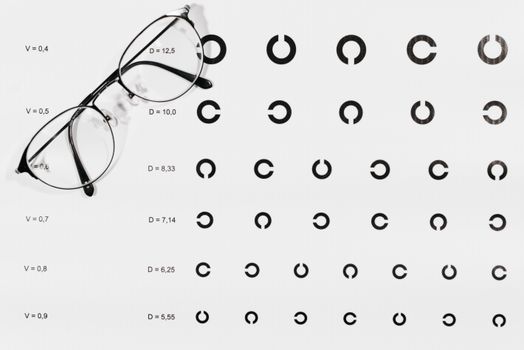
Photo by Pavel Danilyuk / Pexels
The Basic Structure of Every Prescription
Every glasses prescription follows a standardized format used worldwide, including in major Czech cities like Prague, Brno, Ostrava, and Plzeň. The prescription contains specific measurements for each eye and any additional corrections needed.
Understanding Eye Abbreviations
OD (Oculus Dexter) refers to your right eye, while OS (Oculus Sinister) indicates your left eye. Some prescriptions use RE (Right Eye) and LE (Left Eye) instead. You might also see OU (Oculus Uterque), which means both eyes when the same prescription applies to each.
The measurements are typically arranged in columns with the following headers:
- Sphere (SPH) - The main prescription power
- Cylinder (CYL) - Astigmatism correction
- Axis - Direction of astigmatism correction
- Addition (ADD) - Near vision power for progressive lenses
- Pupillary Distance (PD) - Distance between your pupils
Shop the frames in this guide


Decoding the Numbers: What Each Value Means
Sphere Power (SPH)
The sphere value indicates the lens power needed to correct nearsightedness or farsightedness, measured in diopters (D). Negative numbers (-1.25, -3.50) correct myopia (nearsightedness), while positive numbers (+2.00, +1.75) correct hyperopia (farsightedness). A value of 0.00 or "plano" means no sphere correction is needed.
Sphere powers typically range from -20.00 to +20.00, though most prescriptions fall between -10.00 and +6.00. Each 0.25 increment represents a noticeable difference in vision clarity.
Cylinder and Axis for Astigmatism
Cylinder values correct astigmatism, an irregular curvature of the cornea or lens. Like sphere measurements, cylinder powers use negative or positive numbers, typically ranging from -4.00 to +4.00. The axis, measured in degrees from 1 to 180, indicates the orientation of the astigmatism correction.
Pro tip: Many people don't realize that cylinder powers below -0.75 often don't require correction in everyday glasses, though this depends on your visual demands and sensitivity.
Axis directions follow specific patterns:
- 1-30°: Nearly horizontal astigmatism
- 60-120°: Oblique astigmatism (often most noticeable)
- 150-180°: Nearly vertical astigmatism
Addition Power for Multifocal Lenses
The ADD value appears only for progressive or bifocal prescriptions, typically ranging from +0.75 to +3.50. This additional power helps with near vision tasks like reading. The ADD value is always positive and usually identical for both eyes.
| ADD Power | Typical Age Range | Near Vision Need |
|---|---|---|
| +0.75 to +1.25 | 40-45 years | Early presbyopia |
| +1.50 to +2.00 | 45-55 years | Moderate presbyopia |
| +2.25 to +3.00 | 55+ years | Advanced presbyopia |
Pupillary Distance and Fitting Measurements
Pupillary Distance (PD) measures the space between your pupils in millimeters, crucial for proper lens alignment. Adult PDs typically range from 54mm to 74mm, with an average around 63mm. Some prescriptions show separate measurements (e.g., 32/30) for distance from the nose bridge to each pupil.
Critical insight: An incorrect PD by just 2-3mm can cause eye strain, headaches, and blurred vision, even with a perfect prescription. This is why professional measurement or careful self-measurement is essential when ordering glasses online.
Additional Prescription Notations
Modern prescriptions might include special annotations:
- Prism - Corrects muscle imbalances, noted with direction (BU=Base Up, BD=Base Down, BI=Base In, BO=Base Out)
- Seg Height - For bifocals, indicating where the reading portion begins
- Near PD vs Distance PD - Different measurements for various visual tasks
Choosing the Right Lenses for Your Prescription
Once you understand your prescription values, selecting appropriate lenses becomes straightforward. Higher prescriptions benefit from high-index lenses (1.67 or 1.74) to reduce thickness and weight, while standard prescriptions work well with 1.56 or 1.61 index lenses.
For Czech residents seeking quality eyewear, Lensdy offers comprehensive prescription solutions with over 200 frame styles and prescription lenses starting from €29. Based in London at 128 City Road, EC1V 2NX, we provide reliable delivery to Prague, Brno, Ostrava, Plzeň, and throughout the Czech Republic within 1–2 weeks.
Consider these popular frame options for different prescription types:
- Strong prescriptions: PrecisionPeak titanium frames offer durability and lightweight comfort
- Everyday wear: Minty acetate frames provide style and versatility
- Professional settings: SkyAura offers sophisticated aesthetics
- Modern appeal: Turquoise combines contemporary design with practical functionality
Lensdy's lens options include single vision, progressive lenses, blue light blocking, photochromic, and anti-reflective coatings. All orders include free shipping on orders over €59 across Europe.
Frequently Asked Questions
How often should I get my prescription checked?
Adults should have eye exams every 2 years, or annually after age 60. However, if you experience vision changes, headaches, or eye strain, schedule an exam sooner. Prescriptions typically remain valid for 2 years in most European countries, including the Czech Republic.
Can I use an old prescription to order new glasses?
While legally valid prescriptions can be used, vision changes gradually over time. Using a prescription older than 2 years may result in suboptimal vision correction. For the clearest vision, use your most recent prescription when ordering new glasses.
What's the difference between distance and reading prescriptions?
Distance prescriptions correct vision for objects 6 meters or farther away, while reading prescriptions include additional plus power for close work. If you need both, progressive lenses provide seamless transition between distances, while bifocals offer distinct zones for each range.
Why do my left and right eye prescriptions differ?
It's completely normal for eyes to have different prescriptions. In fact, perfectly matched eyes are uncommon. Differences up to 2 diopters rarely cause issues, though larger differences might require special lens considerations or different frame adjustments.
Ready to put your prescription knowledge to use? Browse Lensdy's extensive collection of frames and find your perfect pair with professional-quality lenses delivered right to your door across Europe.