

Why Small Face Glasses Always Look Wrong (Sizing Secrets)
Quick answer
Glasses look wrong on a small face when they are chosen by size label rather than by measurement, because frame sizing is inconsistent between brands, so one label's "small" may be wider than another's "medium." The measurements that actually matter are printed on the temple arm: for a genuinely small face, aim for a lens width of about 47-52mm, a bridge width of roughly 16-19mm to prevent sliding, and temple length around 135-140mm to reduce pressure, while keeping total frame width no wider than your face at the temples. Bridge fit, more than lens size, determines whether glasses stay in place, so a narrower bridge is usually key for small noses. Ignoring these numbers is why frames slide down, sit too wide, or look oversized. The reliable method is to read the three-number frame measurements, match them to your own face width and bridge, and prioritise a snug bridge so small-face glasses look proportioned and stay put.
Finding glasses for a small face isn't about grabbing the smallest frames on the shelf. Most people make critical sizing mistakes that leave them with glasses that slide down, look oversized, or create unflattering proportions. The real challenge lies in understanding frame geometry and how specific measurements interact with your facial structure.
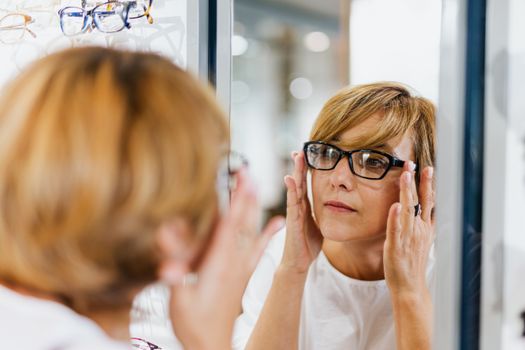
Photo by www.kaboompics.com / Pexels
The Hidden Problem with "Small" Frame Labels
Frame manufacturers use inconsistent sizing standards. A "small" frame from one brand might measure 52mm lens width, while another brand's "medium" could be 50mm. This labeling chaos means you can't rely on size categories alone.
The critical measurements that actually matter are:
- Lens width: 47-52mm for genuinely small faces
- Bridge width: 16-19mm (narrower bridges prevent sliding)
- Temple length: 135-140mm (shorter temples reduce pressure)
- Frame width: Should not exceed your face width at the temples
Most opticians focus only on lens width, but bridge fit determines whether your glasses will stay in position or constantly slip down your nose.
Shop the frames in this guide


Why Your Current Glasses Don't Fit Properly
Small faces encounter three common fitting problems that aren't immediately obvious:
Bridge Gap Issues
When the bridge is too wide, glasses rest on the very tip of your nose instead of the stronger nasal bone area. This creates pressure points and constant sliding. Look for bridges between 16-18mm if you have a narrow nose bridge.
Temple Pressure Problems
Standard temple lengths (140-145mm) are designed for average head sizes. On smaller heads, excess temple length creates uneven pressure distribution, leading to headaches and marks behind your ears.
Lens Positioning Errors
Oversized lenses push your pupils away from the optical center of the lens, causing eye strain and distorted vision, especially with higher prescriptions or progressive lenses.
| Face Feature | Ideal Frame Measurement | Common Mistake |
|---|---|---|
| Narrow nose bridge | 16-18mm bridge width | Choosing 19-21mm bridges |
| Close-set eyes | 47-50mm lens width | Going larger than 52mm |
| Petite face width | 125-132mm total frame width | Exceeding face width by 10mm+ |
Frame Materials That Actually Work for Small Faces
Material choice significantly impacts fit and comfort on smaller facial structures:
Memory Metal Advantages
Flexible frames adjust to slight size variations and maintain their shape over time. They're particularly valuable for small faces because they can be fine-tuned without breaking, something rigid materials can't offer.
Titanium Benefits
Titanium frames can be manufactured in precise smaller dimensions without structural weakness. The material's strength allows for thinner frame construction, reducing visual bulk on petite features.
Acetate Limitations
While acetate offers style variety, thick acetate frames can overwhelm small faces. If choosing acetate, opt for thinner rim profiles (2-3mm) rather than chunky designs.
Shape Selection Strategy for Small Faces
Frame shape impacts perceived facial proportions more than size alone:
Rectangular frames add structure to round or oval faces but should maintain gentle curves rather than sharp angles. The Rosélia demonstrates this balance with its softly rectangular silhouette.
Cat-eye styles can elongate smaller faces, but avoid extreme upswept angles that create an unnatural look. Subtle cat-eye shapes provide lift without overwhelming.
Round frames work well on angular small faces but require careful sizing. The lens width should never exceed your cheekbone width.
Avoid oversized trends that dominate your facial features. What looks fashionable on larger faces often appears costume-like on petite features.
Prescription Considerations for Small Frames
Higher prescriptions create unique challenges in smaller frames:
Lens Thickness Management
Small frames actually help minimize lens thickness at the edges, making them ideal for stronger prescriptions. Choose high-index materials (1.67 or 1.74) to further reduce thickness.
Progressive Lens Fitting
Smaller frames limit the vertical space available for progressive corridors. Ensure at least 28mm of lens height for comfortable progressive wear. Some advanced progressive designs work in frames as small as 26mm height.
Pupil Distance Alignment
Small faces often have narrow pupil distances (58-62mm). Ensure your frame choice allows proper optical centering within this range.
Professional Fitting vs. Online Ordering
Small faces benefit from precise measurements that many online tools miss:
Critical measurements to verify:
- Vertex distance (lens to eye spacing)
- Pantoscopic tilt (frame angle)
- Wrap angle (frame curvature)
- Nose pad positioning
Quality online retailers provide detailed measurements for each frame. The Seraphine and AquaLuxe include comprehensive sizing information to ensure proper fit before ordering.
Adjustment and Maintenance Tips
Small frames require different adjustment approaches:
Nose pad optimization: Adjustable nose pads allow fine-tuning of bridge fit. Fixed bridges must fit correctly from the start.
Temple adjustment: Small faces often need temple tips bent at different angles to follow the ear contour properly.
Regular maintenance: Smaller frames show loosening more quickly because there's less material to distribute stress. Check screw tightness monthly.
Common Small Face Frame Myths
"Smaller frames make your eyes look bigger" - This depends on prescription strength and lens type, not frame size alone.
"You should match frame width to face width exactly" - Frames should be slightly narrower than your face width at the temples.
"Delicate frames are always better for small faces" - Frame delicacy should match your features, not your face size.
Finding Quality Small Face Frames
Lensdy offers over 200 frame styles with detailed measurements for each design, making it easier to find properly sized frames for smaller faces. Based in London, we provide prescription lenses starting from €29 with free shipping on orders over €59 across Europe.
Our prescription glasses collection includes frames specifically designed for smaller facial structures, with accurate sizing information and flexible materials like memory metal and titanium. The Roseveil exemplifies how smaller frames can maintain elegance while providing proper fit.
Frequently Asked Questions
What's the smallest frame size available for adults?
Adult frames typically start at 44mm lens width, though some specialty frames go as small as 42mm. Most small faces work well with 47-50mm lens widths when properly fitted.
Can I wear oversized frames if I have a small face?
Oversized frames can work if they don't exceed your face width at the temples and the bridge fits properly. The key is proportion, not absolute size.
Do small frames limit my lens options?
Small frames actually work better for high prescriptions due to reduced edge thickness. Progressive lenses require minimum lens height, but most small frames accommodate standard progressive designs.
How do I measure my face for online frame shopping?
Measure your current well-fitting frames rather than your face directly. Note the lens width, bridge width, and total frame width, then compare to online specifications.
Ready to find frames that actually fit your face? Browse our carefully measured collection at lensdy.com and discover how properly sized glasses can transform both your vision and appearance.