

What Opticians Spot When Reading Your Glasses Prescription
Quick answer
When opticians read your glasses prescription, they're analyzing your visual correction needs and identifying potential lens and frame challenges based on the standardized measurements. They examine sphere values to determine if you're nearsighted (negative values) or farsighted (positive values), while cylinder and axis measurements reveal astigmatism correction requirements.
High prescriptions beyond ±6.00 diopters signal the need for thinner, high-index lenses to avoid thick, heavy glasses, with prescriptions exceeding ±8.00 often requiring 1.74 index lenses. Low prescriptions between ±0.25 and ±2.00 offer more frame flexibility with standard 1.56 index lenses. Opticians pay particular attention to prescription differences between eyes greater than 2.00 diopters, which may cause adaptation issues. High cylinder values above -2.00 significantly impact lens thickness and frame selection, while pupillary distance measurements determine proper optical center alignment. Incorrect PD causes prism effects, eye strain, and reduced visual fields, making precise measurement crucial for comfortable vision correction.
When an optician examines your glasses prescription, they're reading far more than just numbers. They're interpreting your visual needs, spotting potential lens complications, and identifying the best frame matches for your specific correction. Understanding what these professionals see can help you make smarter decisions about your eyewear.
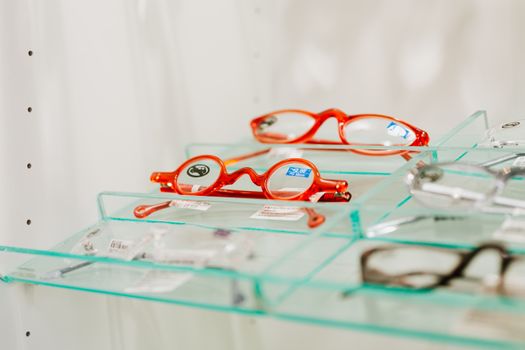
Photo by www.kaboompics.com / Pexels
The Anatomy of Every Glasses Prescription
Every prescription contains standardized abbreviations that reveal specific details about your vision correction needs. Here's what each component means:
| Abbreviation | Meaning | What It Tells Opticians |
|---|---|---|
| OD/RE | Right Eye (Oculus Dexter) | Always listed first, measurements in diopters |
| OS/LE | Left Eye (Oculus Sinister) | Listed second, often differs from right eye |
| SPH | Sphere Power | Main lens power for nearsightedness (-) or farsightedness (+) |
| CYL | Cylinder Power | Astigmatism correction strength |
| AXIS | Cylinder Axis | Astigmatism correction angle (0-180 degrees) |
| ADD | Addition Power | Extra magnification for reading (progressive lenses) |
| PD | Pupillary Distance | Distance between pupils in millimeters |
Shop the frames in this guide


Sphere Values: More Than Just Strength
The sphere measurement reveals your primary refractive error. Negative values (like -2.50) indicate myopia, while positive values (+1.75) show hyperopia. Experienced opticians immediately recognize several key patterns:
High prescriptions beyond ±6.00 diopters require thinner, high-index lenses to avoid thick, heavy glasses. Prescriptions exceeding ±8.00 often benefit from 1.74 index lenses, the thinnest available.
Low prescriptions between ±0.25 and ±2.00 offer more frame flexibility. Standard 1.56 index lenses work perfectly without adding unnecessary cost.
Prescription differences between eyes greater than 2.00 diopters may cause adaptation issues with new glasses. Opticians often recommend gradual adjustment periods.
The Hidden Impact of Cylinder and Axis
Astigmatism correction through cylinder and axis values creates unique challenges that many people overlook. The cylinder power indicates astigmatism strength, while the axis shows the precise angle of correction needed.
High cylinder values above -2.00 significantly affect lens thickness and frame selection. Against-the-rule astigmatism (axis 90-180°) often causes more visual distortion in wide frames compared to with-the-rule astigmatism (axis 0-90°).
Opticians pay special attention to axis measurements because even 5-degree variations can cause blurred vision. This precision requirement makes accurate frame fitting crucial for astigmatism correction.
Pupillary Distance: The Make-or-Break Measurement
Pupillary distance determines where optical centers align with your pupils. Standard adult PD ranges from 54-74mm, with most falling between 60-66mm. Incorrect PD causes several problems:
- Prism effects: Off-center lenses create unwanted prism, causing eye strain and headaches
- Reduced visual field: Misaligned optical centers limit peripheral vision
- Adaptation difficulties: Brain struggles to process incorrectly positioned images
Professional opticians measure PD using specialized pupillometers for ±0.5mm accuracy. Some prescriptions include separate distance and near PD measurements for progressive lenses, typically differing by 2-4mm.
Progressive Lens Prescriptions: Advanced Considerations
Addition power (ADD) in progressive prescriptions reveals reading strength needs. Common ADD values range from +0.75 to +3.00, with most presbyopic patients requiring between +1.25 and +2.50.
Experienced opticians recognize that higher ADD values limit frame size options. ADD powers above +2.25 work better in frames with vertical heights exceeding 32mm to accommodate the progressive corridor length.
The relationship between distance prescription and ADD also affects lens design selection. Patients with high myopia (-6.00 or stronger) plus high ADD values often benefit from specialized progressive designs to minimize peripheral distortion.
Lens Material Recommendations Based on Prescription Analysis
Opticians choose lens materials by analyzing multiple prescription factors simultaneously:
Standard Index (1.56): Perfect for Low Prescriptions
Sphere powers between ±0.25 and ±2.00 with cylinder values under -1.00 work excellently with standard plastic lenses. These offer the best value without compromising optical quality.
Mid-Index (1.61): The Balanced Choice
Prescriptions with sphere values ±2.25 to ±4.00 benefit from 1.61 index lenses. They provide 20% thinner profiles than standard lenses while remaining cost-effective.
High-Index (1.67 and 1.74): For Strong Prescriptions
Sphere powers exceeding ±4.00 require high-index materials. The 1.67 index works well for most cases, while 1.74 index suits prescriptions above ±6.00 where maximum thinness matters most.
Common Prescription Reading Mistakes
Several prescription interpretation errors can lead to unsuitable eyewear choices:
Ignoring cylinder orientation: Assuming all astigmatism corrections are identical regardless of axis values. Horizontal cylinders (axis near 90°) behave differently than oblique cylinders (axis 30-60°).
Overlooking prescription balance: Significant power differences between eyes affect frame weight distribution and visual comfort.
Misunderstanding ADD progression: Believing higher ADD values always mean stronger reading needs, when they actually indicate natural aging progression requiring different lens designs.
Frame Selection Based on Prescription Analysis
Smart frame selection depends heavily on prescription characteristics. Strong minus prescriptions make eyes appear smaller, so larger frame sizes help balance facial proportions. Plus prescriptions magnify eyes, making smaller frames more flattering.
Astigmatism corrections above -1.50 cylinder work better in frames with consistent lens curves. Curved acetate frames like SkyAura maintain optical quality better than flat-fronted designs for significant astigmatism.
Progressive lens wearers need frames with adequate vertical height. Larger frames like Vista Green provide the space necessary for smooth power transitions in progressive lenses.
When Prescriptions Indicate Special Lens Features
Certain prescription patterns suggest additional lens treatments that enhance visual comfort:
Anti-reflective coating becomes essential for prescriptions above ±3.00, where lens reflections significantly impact vision quality. High-index lenses reflect more light, making AR coating crucial for visual comfort.
Blue light filtering benefits patients spending extensive time on digital devices, regardless of prescription strength. Frames like BluePearl pair well with blue light blocking lenses for computer work.
Photochromic lenses suit active lifestyles, automatically adjusting to lighting conditions. They work effectively across all prescription ranges, though transition speed varies slightly with lens thickness.
Professional Prescription Verification
Opticians verify prescription accuracy through multiple checks before lens ordering. They confirm mathematical relationships between sphere, cylinder, and axis values, ensuring measurements fall within logical ranges.
Prescription dates matter significantly. Eyeglass prescriptions typically remain valid for two years, but vision changes gradually. Prescriptions older than 18 months may no longer provide optimal correction.
Modern frame styles like Delicate in Black accommodate various prescription needs while maintaining contemporary aesthetics. The key lies in matching technical requirements with personal style preferences.
Getting Your Perfect Prescription Glasses
Understanding your prescription empowers better eyewear decisions, but professional guidance ensures optimal results. At Lensdy, our experienced team applies this prescription analysis expertise to every order.
We stock over 200 frame styles designed to work beautifully with various prescription types, from simple single vision corrections to complex progressive lenses. Our prescription lenses start from just €29, including professional fitting calculations and quality verification.
Based in London at 128 City Road, EC1V 2NX, we ship across Europe with free standard delivery, ensuring your carefully crafted prescription glasses reach you perfectly fitted and ready to wear.
Browse our complete prescription glasses collection to find frames that complement both your prescription needs and personal style. Every pair receives the same detailed prescription analysis that opticians use to create comfortable, clear vision.
Ready to put your prescription knowledge into practice? Visit lensdy.com today and discover how professional prescription analysis translates into perfectly fitted glasses that enhance both your vision and your look.