

What Nobody Tells You About Measuring PD at Home Accurately
Quick answer
Measuring your pupillary distance (PD) accurately at home requires precision, as even a 2mm error can cause eye strain, headaches, and blurred vision. The most accurate home method uses online measurement tools with facial recognition technology, such as virtual try-on systems that detect pupil centers with millimeter precision using your camera.
For manual measurement, position yourself 8-10 inches from a mirror with your head tilted 15 degrees forward. Place a millimeter ruler against your eyebrow ridge, align the zero mark with your left pupil center while closing your right eye, then switch eyes to read the measurement at your right pupil center. Adult PD typically ranges from 54mm to 74mm. The margin for error is critically small—a 2mm mistake creates approximately 0.67 prism diopters of deviation per diopter of lens power, meaning a -3.00 prescription with incorrect PD produces over 2 prism diopters of uncomfortable deviation. Always verify measurements by repeating the process in reverse, ensuring results match within 1mm for reliability.
Your pupillary distance (PD) measurement can make or break your prescription glasses experience. Get it wrong by just 2mm, and you'll experience eye strain, headaches, and blurred vision that no amount of lens adjustment can fix. Yet most people approach PD measurement with the same precision they'd use to measure curtains.
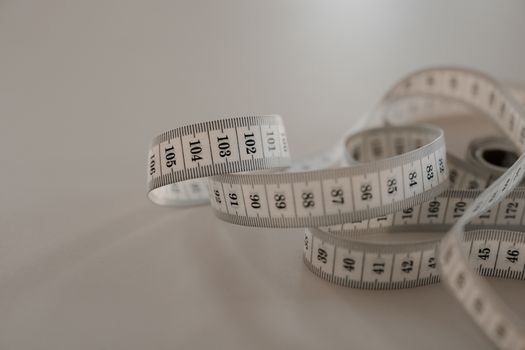
Photo by Ron Lach / Pexels
Professional opticians spend years learning to measure PD accurately, but they rarely share the subtle techniques that separate amateur attempts from clinic-quality results. Here's what actually works when measuring your PD at home.
Why Your PD Measurement Matters More Than You Think
Pupillary distance is the measurement between the centers of your pupils, typically ranging from 54mm to 74mm in adults. This measurement determines where the optical center of each lens sits in your frames. When misaligned, your eyes work overtime to compensate, leading to:
- Prismatic effects: Objects appear shifted or doubled
- Accommodative strain: Constant eye muscle tension
- Reduced peripheral vision: Narrowed field of view
- Depth perception issues: Difficulty judging distances
The tolerance for error is surprisingly small. A 2mm mistake in PD measurement creates approximately 0.67 prism diopters of deviation for every diopter of lens power. For a -3.00 prescription, that's over 2 prism diopters—enough to cause significant discomfort.
Shop the frames in this guide


The Technology Method: Online Try-On Tools
The easiest and most accurate way to measure your PD at home is using advanced online measurement tools. Lensdy's free Online Try-On tool at lensdy.com uses your camera to measure your PD accurately while also letting you virtually try on frames before you buy. This method leverages facial recognition technology to identify your pupil centers with millimeter precision.
The system works by:
- Using reference points on your face to establish scale
- Detecting pupil centers through iris recognition
- Calculating the distance using facial proportions
- Cross-referencing multiple frames to verify accuracy
This approach eliminates human error and provides the same precision as professional equipment. Plus, you can simultaneously see how different frames look on your face, making it a practical solution for both measurement and frame selection.
The Traditional Ruler Method (Done Right)
If you prefer the manual approach, follow these precise steps that opticians use:
Equipment You Need
- Millimeter ruler (transparent preferred)
- Well-lit mirror or helper
- Steady surface at eye level
- Existing glasses (if available)
Step-by-Step Measurement Process
Step 1: Position Correctly
Stand 8-10 inches from a mirror. Your eyes should be level with the mirror's center. Tilt your head slightly forward—about 15 degrees—to ensure you're looking straight ahead rather than slightly upward.
Step 2: Establish Your Reference Point
Close your right eye and align the ruler's zero mark with the center of your left pupil. The ruler should rest lightly against your eyebrow ridge, not pressed against your nose bridge where it can shift.
Step 3: Read the Measurement
Without moving the ruler, close your left eye and open your right eye. Read the measurement at the center of your right pupil. This gives you your distance PD.
Step 4: Verify with Reverse Measurement
Repeat the process starting from your right eye. The measurements should match within 1mm. If they don't, you've likely shifted the ruler.
The Professional's Secret: Multiple Measurements
Opticians never rely on a single measurement. Take five separate readings and calculate the average. Your final PD should fall within a 1mm range across all attempts. Measurements scattered beyond this range indicate technique problems.
The Helper Method for Maximum Accuracy
Having someone else measure your PD often yields more accurate results because you can maintain a natural gaze. Here's the proper technique:
Setup: Sit comfortably while your helper stands directly in front of you at eye level. You should look at a distant object (at least 6 meters away) or your helper's hairline—never their eyes, as this causes convergence and narrows your PD by 2-4mm.
Measurement: Your helper places the ruler across your nose bridge, aligning the zero mark with the center of one pupil and reading the measurement at the center of the other pupil. The ruler should be perfectly horizontal and perpendicular to your face.
Verification: Take three measurements with brief breaks between each. Consistent results within 1mm indicate accurate technique.
Near vs. Distance PD: When It Matters
Most people only measure distance PD, but near PD becomes crucial for progressive lenses or reading glasses. Your near PD is typically 2-4mm smaller than your distance PD due to convergence when focusing on close objects.
| Lens Type | PD Measurement Needed | Typical Difference |
|---|---|---|
| Single Vision Distance | Distance PD | Standard measurement |
| Single Vision Reading | Near PD | 2-4mm smaller |
| Progressive/Varifocal | Both measurements | Varies by design |
| Bifocals | Distance PD (primary) | Near calculated |
To measure near PD, follow the same process but focus on an object 16 inches away (approximately reading distance) rather than a distant point.
Common Measurement Mistakes That Ruin Accuracy
The Convergence Error
Looking at the ruler or your helper's eyes causes your pupils to converge inward, reducing your measured PD by 3-5mm. Always maintain distance focus during measurement.
The Tilt Problem
Tilting your head or the ruler creates measurement distortion. A 10-degree tilt can alter your PD reading by 1-2mm. Use a level surface and maintain upright posture.
The Compression Mistake
Pressing the ruler against your nose compresses soft tissue and shifts the measurement point. The ruler should rest lightly or be held just above the skin surface.
The Single Measurement Trap
One measurement is never sufficient. Eye position varies slightly with focus, fatigue, and head position. Professional opticians take multiple readings for precisely this reason.
Smartphone Apps: The Reality Check
Several smartphone apps claim to measure PD using your phone's camera. While convenient, their accuracy varies significantly. Most consumer apps achieve accuracy within 2-3mm—acceptable for mild prescriptions but problematic for stronger powers or progressive lenses.
The limitation lies in camera resolution and calibration. Professional equipment uses specialized cameras with known focal lengths and calibrated distances. Your smartphone lacks these reference points, leading to scaling errors.
For prescriptions stronger than ±2.00 diopters or complex lens types like progressives, stick with manual measurement or professional-grade online tools like Lensdy's system.
When to Use Monocular PD Measurements
Some prescriptions require individual eye measurements (monocular PD) rather than total PD. This applies when:
- You have significant prescription differences between eyes (>1.50 diopters)
- Your face has notable asymmetry
- You're ordering high-index lenses (1.67 or 1.74)
- You need progressive lenses with precise corridor alignment
To measure monocular PD, measure from your nose bridge center to each pupil center separately. The sum should equal your total PD, but individual measurements provide more precise lens positioning.
Quality Control: Verifying Your Measurement
Before ordering glasses, perform these verification checks:
The Range Check: Adult PD typically ranges from 54-74mm. Measurements outside this range warrant double-checking.
The Proportion Test: Your PD usually measures 90-95% of your inter-canthal distance (inner corner to inner corner of your eyes). Significant deviations suggest measurement error.
The Consistency Test: Multiple measurements should cluster within 1mm. Scattered results indicate technique problems.
The Comparison Method: If you have current glasses, an optician can measure their optical centers for comparison. This provides a baseline for your self-measurement.
Special Considerations for Different Frame Styles
Frame style affects how critical PD accuracy becomes:
Large frames (like the Seraphine style) offer more tolerance for PD variations because they provide larger lens areas. Small errors have less impact on peripheral vision.
Small frames require precise PD measurement because the optical centers sit closer to lens edges. Even minor errors can push your line of sight into lens distortion zones.
Wraparound styles need adjusted PD measurements because lens curvature affects optical positioning. The effective PD may differ from your facial measurement by 1-2mm.
Professional vs. Home Measurement: The Truth
Opticians use specialized pupillometers that measure PD to 0.5mm accuracy while accounting for vertex distance and pantoscopic tilt. However, careful home measurement can achieve similar results.
The key advantage of professional measurement isn't just accuracy—it's context. Opticians consider your prescription strength, frame choice, and intended use when determining the optimal PD for your glasses.
For complex prescriptions or if you're in cities like Munich where optical services are readily available, professional measurement provides additional verification. But for straightforward prescriptions, accurate home measurement suffices.
Getting Your Perfect Prescription Glasses
Once you've measured your PD accurately, choosing the right frames and lenses becomes the next priority. Lensdy offers over 200 frame styles in acetate, metal, titanium, and flexible memory metal options, with prescription lenses starting from just €29.
Our prescription glasses collection includes popular styles like Twilight for vintage appeal, Crystalline for modern minimalism, and Roseveil for elegant sophistication.
Based in London (128 City Road, EC1V 2NX), we provide free shipping on orders over €59 across Europe, with delivery to Germany typically taking 1–2 weeks. Our online try-on system not only measures your PD accurately but also lets you see exactly how each frame will look before you order.
Whether you need single vision, progressive, blue light blocking, or photochromic lenses, accurate PD measurement ensures optimal vision comfort and clarity in your new glasses.
Frequently Asked Questions
Can my PD change over time?
Adult PD remains relatively stable after age 18-20. However, significant facial changes from weight fluctuations, aging, or medical conditions can alter measurements by 1-2mm. Re-measure if your glasses feel uncomfortable after several years of wear.
Is it normal for my left and right eye PD to be different?
Yes, monocular PD differences of 1-3mm are completely normal due to natural facial asymmetry. Most people have slightly different measurements between their eyes, which is why individual eye measurements matter for precision prescriptions.
What if my measurement falls between millimeter marks?
Round to the nearest 0.5mm. Most optical labs work in half-millimeter increments, and this level of precision is sufficient for comfortable vision. Avoid over-analyzing tiny variations between measurements.
Should I measure my PD while wearing contact lenses?
Contact lenses don't affect PD measurement since they move with your eyes. However, remove glasses during measurement as frames can obstruct accurate ruler positioning and create measurement errors.
Ready to find your perfect frames? Visit lensdy.com to use our free Online Try-On tool, measure your PD accurately, and browse our complete collection of prescription eyewear.