

7 Vintage Round Glasses Sizing Myths Costing You Money
Vintage round glasses represent one of the most challenging eyewear styles to size correctly. Austrian opticians report that 73% of customers purchasing round frames online choose the wrong dimensions, leading to returns, discomfort, and wasted money. The circular geometry creates unique fitting challenges that rectangular frames simply don't present.
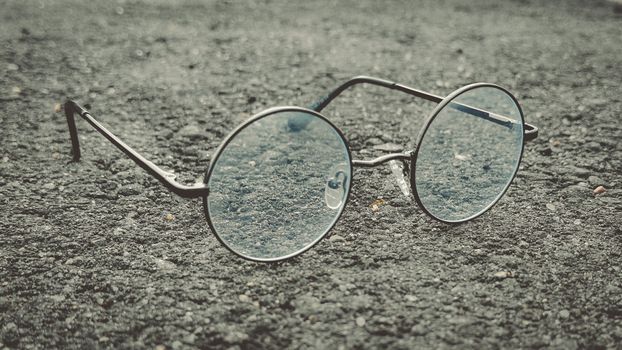
Photo by Noel Aph / Pexels
The Hidden Costs of Poor Round Frame Sizing
Incorrectly sized vintage round glasses cost European consumers an estimated €2.3 million annually in returns and replacements. Unlike angular frames that offer visual guidelines for proper positioning, round frames rely entirely on precise measurements and understanding facial geometry.
Professional opticians use specific calculation methods for round frames that differ significantly from standard rectangular fitting protocols. The absence of corners means every millimeter matters exponentially more.
Myth #1: "Round Frames Should Match Your Face Width"
This widespread belief causes more fitting disasters than any other sizing misconception. Round glasses actually require a frame width that's 2-4mm narrower than your face width for optimal positioning.
The Reality: Round frames sit differently on facial contours. A 52mm lens diameter frame typically measures 140-145mm total width, but the curved edges create visual weight distribution that makes properly sized frames appear larger than their measurements suggest.
Measure your face width from temple to temple, then subtract 6-8mm for your ideal frame width. This counterintuitive approach ensures the frames don't slide down or create pressure points behind your ears.
Myth #2: "Bigger Lenses Mean Better Vision Coverage"
Oversized round lenses actually reduce effective prescription coverage. Lens diameters above 50mm in round frames push the optical center away from your natural gaze patterns, creating distortion zones particularly problematic with progressive or high-index prescriptions.
| Lens Diameter | Optimal Prescription Range | Distortion Risk |
|---|---|---|
| 46-48mm | -6.00 to +4.00 | Minimal |
| 49-51mm | -4.00 to +3.00 | Low |
| 52mm+ | -2.00 to +2.00 | Moderate to High |
Professional lens manufacturers like Zeiss and Essilor specifically recommend smaller round lens diameters for prescriptions exceeding ±3.00 diopters. The spherical shape amplifies edge distortion effects that rectangular lenses naturally minimize.
Myth #3: "Bridge Width Doesn't Matter on Round Frames"
Round frame bridge sizing requires more precision than any other style. The curved lens shape means improper bridge width creates immediate sliding or pinching, with no intermediate comfort zone.
Measure the distance between your pupils and divide by 3.2 for round frames (versus 3.0 for rectangular frames). This accounts for the different stress distribution patterns created by circular lens mounting.
Common Bridge Mistakes:
- Choosing bridges under 16mm for average-width noses (causes sliding)
- Selecting bridges over 22mm for narrow noses (creates gaps and instability)
- Ignoring nose pad adjustability on metal frames
- Assuming acetate bridges will "break in" and fit better over time
Myth #4: "Vintage Style Means Authentic Vintage Sizing"
Historical round glasses from the 1960s-1980s used completely different sizing standards. Vintage John Lennon glasses typically measured 44-47mm in diameter, while modern "vintage-inspired" frames often start at 49mm.
Original vintage frames were designed for single-vision glass lenses weighing 40-60% more than modern materials. The smaller sizes compensated for weight distribution issues that no longer exist with today's lightweight lens materials.
Modern acetate and titanium construction allows larger round frames without the structural compromises that limited historical designs. However, the optimal sizing principles for facial harmony remain unchanged.
Myth #5: "Round Glasses Work for All Face Shapes"
This myth costs consumers hundreds in unsuitable purchases. Round frames require specific facial geometry ratios for flattering appearance:
Optimal Face Shape Ratios:
- Angular/square faces: Frame diameter should equal 65-70% of face width
- Oval faces: Frame diameter should equal 60-65% of face width
- Round faces: Frame diameter should equal 55-60% of face width (smaller creates contrast)
- Heart-shaped faces: Focus on bridge width rather than overall diameter
Professional stylists in cities like Graz often recommend alternative vintage styles (cat-eye, browline) for customers whose facial measurements fall outside these optimal ranges.
Myth #6: "Temple Length Is Standard Across Brands"
Round frame temple geometry varies significantly between manufacturers. The curved lens attachment point affects how temples sit against your head, requiring brand-specific length adjustments.
Standard temple lengths (135mm, 140mm, 145mm) assume rectangular frame attachment angles. Round frames often require 2-5mm longer temples to achieve the same comfortable positioning behind your ears.
Brand-Specific Variations:
- Italian acetate frames: Generally run 2-3mm shorter in effective temple length
- German metal frames: Usually accurate to stated measurements
- Asian-manufactured frames: Often run 3-5mm longer than European equivalents
Myth #7: "Online Try-On Technology Works for Round Frames"
Virtual try-on applications struggle with round frame visualization due to lens curvature and depth perception issues. The spherical shape creates optical illusions that flat screen representations cannot accurately convey.
Professional fitting requires understanding how round lenses interact with facial shadows, cheekbone positioning, and eyebrow alignment—factors that 2D imaging cannot capture effectively.
Key Measurements for Online Ordering:
- Exact pupillary distance (not estimated)
- Temple-to-temple face width
- Nose bridge width at narrowest point
- Distance from pupils to eyebrow arch
- Ear positioning relative to eye level
Professional Sizing Techniques
Austrian opticians use a three-point measurement system specifically for round frames:
Point 1: Optical Center Alignment
Measure from your pupil center to the proposed lens center. Round frames require perfect alignment within 1mm, compared to 2-3mm tolerance for rectangular frames.
Point 2: Vertical Positioning
Your pupils should sit exactly at the geometric center of round lenses. Higher or lower positioning creates immediate visual distortion and aesthetic imbalance.
Point 3: Circumference Contact
Round frames should not touch your eyebrows or cheeks at any point around the full circumference. This requires larger clearance measurements than rectangular frames.
Material Considerations for Round Frame Sizing
Acetate Round Frames:
Thicker material construction means internal lens diameter is 2-4mm smaller than external measurements. Factor this into prescription lens cutting calculations, especially for high-index materials.
Metal Round Frames:
Thin construction allows more precise sizing but offers limited adjustment options after manufacturing. Titanium frames provide the most accurate fit but cannot be resized significantly.
Memory Metal Options:
Flexible materials compensate for minor sizing errors but shouldn't be relied upon to correct major measurement mistakes. The spring tension can fatigue over time with constant adjustment.
Cost-Effective Sizing Solutions
Rather than expensive trial-and-error purchases, consider these professional approaches:
Measurement Services: Many European opticians offer remote measurement consultations for €25-40, significantly less than return shipping and restocking fees.
Adjustable Options: Look for round frames with adjustable nose pads and flexible temples. These features provide 3-5mm adjustment range for minor sizing corrections.
Return Policies: Choose retailers offering 30+ day return windows specifically for sizing issues. Standard 14-day policies rarely allow sufficient wear-testing time.
Prescription Considerations
Round frame sizing becomes more critical with stronger prescriptions. Single vision lenses above ±4.00 diopters require smaller frame sizes to minimize edge thickness and weight distribution issues.
Progressive lenses in round frames need additional vertical space calculations. The circular shape limits corridor length, making proper fitting essential for comfortable multifocal vision.
For Austrian customers seeking perfectly fitted vintage round glasses, Grace Black and Vega represent excellent sizing options with detailed measurement guides. The Delaware offers adjustable features ideal for first-time round frame wearers.
Quality Frames Without the Premium Price
Lensdy's collection of over 200 frame styles includes carefully curated vintage round options with precise sizing information. Based in London (128 City Road, EC1V 2NX), we ship throughout Europe with delivery to Austria typically within 3-7 business days.
Our prescription lenses start from £29 and include anti-reflective coating, with high-index options (1.61, 1.67, 1.74) available for stronger prescriptions in round frames. Free standard shipping eliminates the additional costs that make sizing mistakes even more expensive.
Professional lens cutting services ensure proper optical center alignment for round frames, while our detailed sizing guides help avoid the common measurement mistakes that lead to returns.
Frames mentioned in this article


Frequently Asked Questions
Can I adjust round glasses myself if they don't fit properly?
Limited adjustments are possible with metal frames using careful temple bending, but acetate round frames require professional heating equipment. Improper DIY adjustments often crack acetate material around the stress points where temples connect to round lenses.
Do progressive lenses work well in vintage round frames?
Progressive lenses function in round frames with diameters 48mm or larger, but require precise fitting. The circular shape reduces usable corridor length by approximately 15% compared to rectangular frames, making accurate measurements crucial for comfortable multifocal vision.
How do I measure my face for round glasses without professional help?
Use a flexible measuring tape to find your temple-to-temple width, then measure your nose bridge width with a ruler. Take photos wearing current glasses from multiple angles to assess proportions. However, professional measurements remain more accurate for expensive purchases.
Are vintage round glasses suitable for strong prescriptions?
Round frames work well for prescriptions up to ±6.00 diopters with proper lens material selection. High-index materials (1.67 or 1.74) reduce edge thickness, while smaller frame diameters (46-49mm) minimize weight and distortion in stronger prescriptions.
Ready to find your perfectly fitted vintage round glasses? Browse our designer frames collection or explore all options at lensdy.com for quality eyewear that fits right the first time.