

6 Clear Frame Glasses Mistakes Killing Your Professional Look
Quick answer
Clear frame glasses can damage your professional appearance when chosen incorrectly, with fully transparent frames being the biggest mistake. Completely transparent acetate creates a distracting "floating lens" effect under office lighting, making it difficult for others to process where the frame ends and your face begins during presentations and video calls.
Professional-grade clear frames require subtle tints rather than complete transparency—15-25% tint works best for corporate environments, while creative industries can use 5-15% tint. Frame thickness is critical since clear acetate needs 20-30% thicker construction than opaque materials to maintain proper visual weight. Narrow faces (125-135mm width) need 3-4mm thick frames, medium faces (135-145mm) require 4-5mm, and wide faces (145mm+) need 5-6mm thickness. Additionally, clear frames must match your skin undertones—cool undertones pair with blue-grey or crystal tints, while warm undertones work better with champagne or ivory-tinted clear frames to avoid a washed-out appearance.
👓 Looking to buy? Browse our full clear frame glasses collection — prescription-ready, at transparent prices.
The Clear Frame Revolution That's Dividing Workplaces
Clear frame glasses have become the defining eyewear trend of 2026, but they're also the most misunderstood. While celebrities and influencers make transparent frames look effortless, the reality is more complex. Clear frames require precision in selection and styling that most people completely overlook.
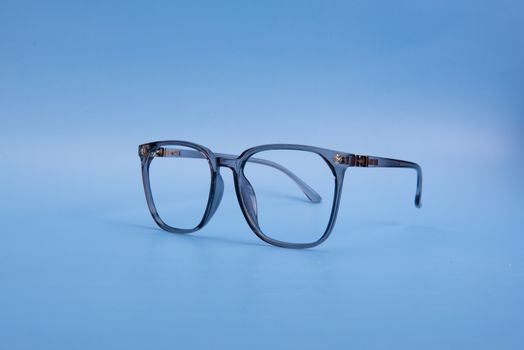
Photo by GlassesShop GS / Pexels
After analyzing thousands of clear frame purchases and customer feedback, we've identified six critical mistakes that transform this sophisticated trend into a style disaster. These aren't minor fashion faux pas—they're fundamental errors that can undermine your professional credibility and personal confidence.
Shop the frames in this guide


Mistake #1: Choosing Fully Transparent Frames for Daily Wear
The biggest misconception about the clear frame glasses trend is that "clear" means completely transparent. Professional opticians know that fully transparent acetate frames—those with zero tint—create an unsettling visual effect in office environments.
Here's the technical reality: completely clear frames disappear against certain lighting conditions, creating a "floating lens" effect that's distracting during presentations and video calls. The human eye struggles to process where the frame ends and your face begins, particularly under fluorescent office lighting.
The Professional Solution: Choose frames with a subtle champagne, crystal grey, or warm ivory tint. These provide the clear aesthetic while maintaining visible structure. The Grace Clear frame exemplifies this approach—technically clear but with enough visual weight for professional settings.
Optimal Transparency Levels by Profession
- Corporate/Finance: 15-25% tint for authority
- Creative Industries: 5-15% tint for subtle sophistication
- Healthcare/Legal: 20-30% tint for trustworthiness
- Tech/Startups: 0-10% tint for innovation appeal
Mistake #2: Ignoring Frame Thickness Proportions
Clear frames expose every design flaw that colored frames can hide. The transparency means your eye immediately notices if the frame thickness is inconsistent or disproportionate to your facial features.
Most people select clear frames using the same thickness rules they'd apply to black or tortoiseshell frames. This is fundamentally wrong. Clear acetate requires 20-30% thicker construction to achieve the same visual weight as opaque materials, but many manufacturers cut corners.
Technical Specifications to Demand:
| Face Width | Optimal Frame Thickness | Temple Width |
|---|---|---|
| Narrow (125-135mm) | 3-4mm | 135-140mm |
| Medium (135-145mm) | 4-5mm | 140-145mm |
| Wide (145mm+) | 5-6mm | 145-150mm |
Frames like the Nova demonstrate proper thickness engineering—substantial enough to maintain presence without overwhelming smaller facial features.
Mistake #3: Neglecting Skin Undertone Compatibility
Clear frames aren't universally flattering, despite marketing claims. The transparency interacts with your skin's undertones in ways that can either enhance or completely wash out your complexion.
Professional colorists understand that clear acetate has subtle undertones—typically cool (blue-grey) or warm (yellow-pink). Choosing the wrong undertone creates a sickly, unflattering effect that's particularly noticeable in natural lighting.
Undertone Matching System
Cool Undertones (blue/pink veins): Select clear frames with blue-grey or pure crystal tints. Avoid any frames with yellow or amber undertones.
Warm Undertones (green/olive veins): Choose clear frames with champagne, honey, or warm ivory tints. Completely colorless frames will appear harsh.
Neutral Undertones: You have the most flexibility—pure clear, light grey, or subtle champagne all work effectively.
Many customers in Budapest and other major Hungarian cities make this mistake when ordering online without professional color matching consultation.
Mistake #4: Using Standard Lens Treatments
Clear frames expose lens edges and treatments more than any other frame style. Standard anti-reflective coatings that work fine in black frames become glaringly obvious in transparent frames, creating unsightly green or purple reflections.
Essential Lens Specifications for Clear Frames:
- Ultra-clear AR coating: 99.5%+ transmission rate
- High-index lenses: 1.67 or 1.74 to minimize edge thickness
- Precision edge polishing: Diamond-grade finishing required
- UV protection: 400nm blocking without yellowing
The lens-to-frame transition must be virtually invisible. Standard lens treatments create a "picture frame" effect that destroys the seamless aesthetic clear frames are supposed to achieve.
Mistake #5: Poor Fit and Adjustment Tolerance
Clear frames are unforgiving when it comes to fit imperfections. A slight gap behind the ear or nose pads sitting too high becomes immediately visible due to the transparency.
Professional fitting requires different techniques for clear acetate:
Critical Adjustment Points:
- Nose pad contact: Must be perfectly flush—any gap shows through the clear material
- Temple curve: Requires precision bending—stress marks appear white in clear acetate
- Pantoscopic tilt: 8-12 degrees optimal—deviations are visually obvious
The Aurora frame features advanced fitting points that accommodate professional adjustments without visible stress marks.
Mistake #6: Inappropriate Styling and Maintenance
Clear frames require different maintenance protocols than traditional frames. Fingerprints, oils, and even dust become highly visible against the transparent material.
Professional Maintenance Protocol:
- Daily cleaning: Microfiber cloth with optical-grade solution
- Deep cleaning: Ultrasonic cleaning weekly (avoid household cleaners)
- Storage: Always in protective case—scratches show dramatically
- Handle positioning: Touch only the temples, never the frame front
Styling Integration
Clear frames work best with minimalist aesthetics. Avoid:
- Bold, patterned clothing that competes for attention
- Heavy makeup around the eye area
- Multiple facial accessories (earrings, piercings)
- Highly textured hair styles near the frame area
Professional Clear Frame Selection Strategy
The clear frame glasses trend demands a more strategic approach than traditional eyewear selection. Consider these professional factors:
Workplace Environment Assessment: Clear frames work best in modern, well-lit offices but can appear washed out in traditional corporate environments with heavy wood and dark colors.
Video Conference Optimization: Clear frames with slight tinting perform better on camera than completely transparent options, which can disappear under ring lighting.
For Hungarian professionals working remotely or in international business contexts, clear frames can project a progressive, tech-forward image while maintaining European sophistication.
Lensdy's Clear Frame Expertise
At Lensdy, our London-based team (128 City Road, EC1V 2NX) specializes in the technical challenges of clear frame eyewear. Our designer frame collection includes over 200 styles, with clear and semi-transparent options engineered for professional wear.
We provide prescription lenses starting from €29, with specialized treatments optimized for clear frames. Our European shipping network ensures delivery to Hungary within 1–2 weeks, with free shipping on orders over €59 included.
Each clear frame undergoes rigorous quality testing for optical clarity, structural integrity, and professional appearance standards. Our fitting guides help you avoid the common mistakes that plague clear frame wearers.
Frequently Asked Questions
Do clear frame glasses make you look younger or older?
Clear frames typically create a more youthful appearance by reducing visual weight around the eyes. However, poorly fitted clear frames can have the opposite effect by drawing attention to imperfections or creating an unfinished look.
Can clear frames work with progressive lenses?
Yes, but progressive lenses in clear frames require higher precision manufacturing. The lens transition lines are more visible, so premium progressive designs with smaller transition zones are essential. High-index materials (1.67 or higher) are strongly recommended.
How long do clear frames stay clear?
Quality clear acetate maintains its transparency for 3-5 years with proper care. Cheaper materials may yellow or cloud within 12-18 months, especially when exposed to UV light or harsh cleaning products.
Are clear frames suitable for strong prescriptions?
Clear frames can work with strong prescriptions, but lens selection becomes critical. High-index lenses (1.74) with premium edge polishing are necessary to maintain the seamless aesthetic. The Vertex frame is specifically designed for higher prescriptions while maintaining clear frame benefits.
Ready to explore professionally-fitted clear frames? Browse our complete collection at lensdy.com and discover why thousands of European professionals trust our expertise for their eyewear needs.