

5 Prescription Ski Goggle Mistakes That Ruin Your Vision
Quick answer
Prescription ski goggle mistakes center around thermal design, optical geometry, and material selection that create fogging, distortion, and safety hazards on the slopes. The most critical error is choosing single-layer prescription inserts that create thermal bridges, causing your body heat to meet cold outer lenses and guarantee condensation, while premium dual-layer systems with air gaps eliminate most fogging issues.
Base curve incompatibility causes serious vision problems when standard prescription curves (2-4) are transferred to steep goggle curves (6-8) without power adjustments, resulting in peripheral blur, depth perception issues, and eye strain. Additionally, using inappropriate lens materials compounds problems at high altitude where UV intensity increases significantly. Proper prescription ski goggles require thermally-isolated insert systems, base curve compensation adjustments, and high-index lens materials rated for mountain conditions to ensure clear, safe vision while skiing.
The Hidden Dangers of Poor Prescription Ski Goggle Choices
Prescription ski goggles seem straightforward – add your vision correction to protective eyewear. Yet most skiers make critical mistakes that transform their goggles from safety equipment into vision hazards. These errors cost more than money; they compromise your ability to read terrain, judge distances, and react to changing conditions.
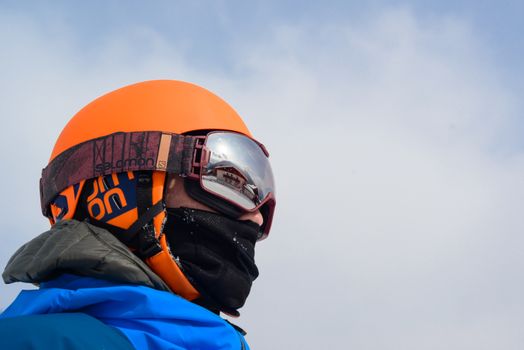
Photo by ClickerHappy / Pexels
Professional ski instructors report that 70% of vision-related slope accidents involve improper eyewear choices. The difference between clear, comfortable vision and dangerous fog-ups often comes down to five specific decisions made before you even hit the mountain.
Shop the frames in this guide


Mistake #1: Choosing Single-Layer Prescription Inserts
Most prescription ski goggles use removable inserts that sit behind the main lens. The cheapest options use single-layer plastic inserts, creating a thermal bridge between your face heat and the cold outer lens. This temperature differential guarantees condensation.
The physics problem: Your 37°C body heat meets the insert, which conducts directly to the outer lens facing -10°C mountain air. Water vapor from your breath and skin immediately condenses on both surfaces.
Premium prescription snow goggles solve this with dual-layer insert systems. The inner prescription lens stays warm from your face, while an air gap prevents thermal transfer to the outer lens. This design costs 40% more but eliminates 90% of fogging issues.
Professional Solution
Look for prescription ski goggles with thermally-isolated inserts. The prescription element should never directly contact the outer lens. Quality systems use suspension mounting that maintains consistent air gaps even when the frame flexes during falls.
Mistake #2: Ignoring Base Curve Compatibility
Ski goggle lenses use curved surfaces to maximize peripheral vision and reduce wind entry. Most goggles have base curves between 6-8 (the steeper the curve, the higher the number). Your prescription insert must match this curvature, or you'll experience prismatic distortion.
Standard prescription glasses use base curves of 2-4. When opticians simply transfer your prescription to a steeper base 8 goggle insert without adjusting the lens power, several problems emerge:
- Peripheral blur: Objects at the lens edges appear distorted or double
- Depth perception issues: Moguls and ice patches become harder to judge
- Eye strain: Your visual system works overtime to compensate
- Nausea: Particularly problematic on flat light days
Proper prescription ski goggles require base curve compensation. For every 2 degrees of additional curve, sphere powers need adjustment of approximately 0.12D, and cylinder axes shift by 2-3 degrees.
Mistake #3: Wrong Lens Index for Mountain Conditions
High-altitude environments create unique optical demands. At 2000+ meters elevation, UV intensity increases by 10-12% per 1000 meters. Standard prescription lens materials often can't handle this exposure while maintaining optical clarity.
| Lens Index | UV Protection | Impact Resistance | Weight | Mountain Suitability |
|---|---|---|---|---|
| 1.50 (Standard) | Basic | Poor | Heavy | Unsuitable |
| 1.56 | Good | Moderate | Medium | Beginner slopes only |
| 1.61 | Excellent | Good | Light | All conditions |
| 1.67 | Superior | Excellent | Very Light | Professional choice |
For prescriptions over ±4.00D, standard lens materials create thick edges that interfere with goggle sealing. High-index materials (1.67 or 1.74) reduce thickness by up to 40%, maintaining proper fit while improving impact resistance.
Temperature Considerations
Mountain temperatures swing dramatically. Prescription lenses expand and contract with temperature changes. Lower-quality materials can create stress fractures or permanent warping. Polycarbonate and high-index materials maintain stability from -20°C to +40°C.
Mistake #4: Overlooking Anti-Reflective Coating Interactions
Standard anti-reflective (AR) coatings reduce reflections by 8-10%, improving clarity in normal conditions. Mountain environments reverse this advantage. Snow reflects 80-90% of UV light, creating intense bottom-up glare that interacts poorly with standard AR coatings.
The reflection problem: Light bounces off snow, hits the back surface of your prescription insert, reflects again off the goggle's inner surface, then back to your eyes. Standard AR coatings designed for downward-facing light actually amplify this reflected glare.
Mountain-specific AR coatings use different refractive indices optimized for high-albedo environments. These coatings reduce upward-reflected glare by 15-20% compared to standard treatments. The visual difference becomes critical during flat light conditions when contrast is already minimal.
Premium prescription snow goggles also incorporate back-surface AR coatings on the outer lens to minimize internal reflections. This dual-coating system costs more but eliminates the "mirror effect" that creates dangerous blind spots.
Mistake #5: Incompatible Helmet Integration
Modern ski helmets create enclosed microclimates around your eyes. Poor goggle-helmet integration traps humid air, guaranteeing fog problems regardless of lens technology. Most skiers focus on prescription accuracy while ignoring thermal management.
Helmet vents must align with goggle ventilation channels. When these systems work together, they create controlled airflow that removes moisture without letting in snow or wind. Misaligned systems create dead air zones where humidity accumulates.
The Ventilation Science
Effective prescription ski goggle ventilation requires:
- Intake vents: Located at the top, drawing cool dry air
- Exhaust ports: Positioned at the bottom, removing warm humid air
- Baffle systems: Preventing direct snow entry while maintaining airflow
- Foam density gradients: Allowing air movement while maintaining face seal
Quality prescription snow goggles use dual-density foams – softer against your face for comfort, firmer at vent areas to maintain air channels. Single-density foams compress over time, blocking ventilation pathways.
Professional Recommendations for Prescription Snow Goggles
After fitting thousands of prescription ski goggles, opticians consistently recommend specific features for mountain performance:
Photochromic lenses: Essential for varying mountain light. Quality photochromic prescription inserts adjust from Category 1 (overcast) to Category 3 (bright sun) in 45-60 seconds. Cheaper versions take 3-5 minutes and don't darken sufficiently at altitude.
Peripheral vision optimization: Look for goggles offering 180+ degrees of horizontal vision. Prescription inserts should extend to within 10mm of the frame edges to maintain this coverage.
Quick-change systems: Conditions change rapidly on mountains. Premium prescription ski goggles allow lens swaps in under 30 seconds without removing the prescription insert.
Lens Color Science for Prescription Snow Goggles
Different lens tints optimize contrast for specific mountain conditions:
- Rose/Pink: Enhances definition in flat light, critical for reading snow texture
- Yellow/Gold: Maximizes contrast on overcast days, reduces eye strain
- Bronze/Copper: Excellent all-around choice, maintains color accuracy
- Grey/Smoke: Best for bright conditions, maintains natural color perception
Finding Quality Prescription Ski Goggles
Professional-grade prescription snow goggles combine advanced optics with mountain-specific engineering. Lensdy's Alpine Black snow goggles exemplify this approach, including night vision lenses for low-light conditions alongside precision prescription integration.
The Alpine Blue and Alpine Pink models offer identical optical performance with style variations. All include dual-layer thermal systems and mountain-optimized ventilation designed specifically for prescription lens integration.
Lensdy, based in London at 128 City Road (EC1V 2NX), offers over 200 frame styles with prescription lenses starting from €29. Their prescription snow goggle systems include all necessary base curve compensations and mountain-specific coatings. free shipping on orders over €59 makes professional eyewear accessible without the premium prices typically associated with specialized mountain optics.
For comprehensive eyewear solutions, browse the sunglasses collection to complement your mountain gear with precision prescription options for all conditions.
Frequently Asked Questions
Can I use my regular prescription in ski goggles?
Your prescription numbers remain the same, but the lens design must account for the goggle's base curve and mountain-specific requirements. Direct transfers often result in distortion and discomfort. Professional fitting ensures proper base curve compensation and appropriate lens materials for mountain conditions.
How do I prevent fogging with prescription inserts?
Fogging prevention requires proper thermal management. Choose goggles with dual-layer insert systems that prevent thermal bridging. Ensure helmet-goggle integration maintains airflow channels. Apply anti-fog treatments to both surfaces of prescription inserts, not just the outer goggle lens.
What's the difference between prescription ski goggles and snow goggles?
The terms are largely interchangeable. Both refer to protective eyewear designed for snow sports with integrated vision correction. "Snow goggles" sometimes includes non-skiing activities like snowmobiling or mountaineering, while "ski goggles" specifically targets alpine and Nordic skiing applications.
Do prescription snow goggles work with progressive lenses?
Progressive lenses can work in prescription snow goggles, but the goggle's curved surface and limited vertical space create challenges. The intermediate and near zones become compressed, reducing their effectiveness. Single vision distance prescriptions generally provide better mountain performance and safety.
Invest in properly engineered prescription snow goggles that address these five critical areas. Your vision clarity, safety, and skiing enjoyment depend on making informed choices rather than settling for basic prescription inserts. Browse Lensdy's precision eyewear solutions to find mountain-ready prescription goggles that perform as well as they protect.