

1.56 vs 1.61 vs 1.67 Lens Index: Which Do You Need?
Quick answer
Choosing the wrong lens index is the primary reason glasses become unnecessarily thick and heavy, regardless of your prescription strength. The lens index determines how efficiently the material bends light—higher numbers create thinner lenses for the same prescription power.
The most critical mistake is using standard 1.50 or 1.56 index lenses for prescriptions exceeding ±2.00 dioptres. For prescriptions between -2.00 and -4.00, upgrading to 1.61 index makes a clear thickness difference, while 1.67 is the usual step for -4.00 to -6.00 prescriptions. Ultra-high 1.74 is what most people consider once the prescription goes above -6.00. However, higher-index materials reflect more light and are more brittle, requiring anti-reflective coatings and careful handling. Large frames over 54mm amplify thickness problems and warrant upgrading to the next index level, while smaller frames under 50mm can accommodate standard materials even with moderate prescriptions. Don't forget that astigmatism correction adds to total lens power—a -2.00 sphere with -1.50 cylinder behaves like a -3.50 prescription for thickness purposes.
Frames that keep strong lenses thinner
- Every frame with a lens width of 52 mm or less: glasses for high prescriptions
- 45 mm lens width: Marbre Black, a black acetate pantos
- 51 mm lens width: Toffee Brown, a brown acetate cat-eye
- 52 mm lens width: Orleans, a black acetate rectangle
Your prescription strength determines how thick your glasses will be, but choosing the wrong lens index can make them unnecessarily bulky and heavy. Most people default to standard 1.50 index lenses without realizing that higher-index options can dramatically reduce thickness and weight.
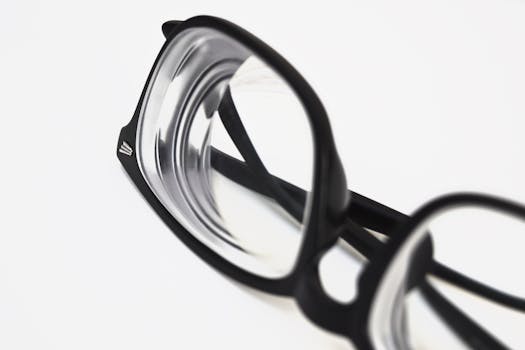
Photo by Marta Branco / Pexels
Lens index refers to how efficiently the material bends light. The higher the number, the thinner the lens becomes for the same prescription strength. Here are the five most common mistakes people make when selecting their lens index.
Mistake 1: Using Standard Index for High Prescriptions
The biggest error is sticking with standard 1.50 or 1.56 index lenses when your prescription exceeds ±2.00 dioptres. Beyond this threshold, standard materials create noticeably thick edges that affect both appearance and comfort.
For prescriptions between -2.00 and -4.00, 1.61 index lenses look and feel thinner than standard materials. For stronger prescriptions from -4.00 to -6.00, 1.67 index is the sensible step.
The most dramatic difference occurs with prescriptions above -6.00 dioptres, where 1.74 index lenses keep the edges under control. This isn't just cosmetic—thinner lenses mean lighter glasses that won't slide down your nose or leave marks on your bridge.
Shop the frames in this guide


Mistake 2: Ignoring Frame Size Impact on Lens Thickness
Large frames amplify lens thickness problems, especially for myopic (nearsighted) prescriptions. The distance from the lens center to the frame edge determines the maximum thickness point. Our glasses for high prescriptions collection brings together full-rim frames with a lens width of 52 mm or less.
A 52mm lens diameter with a -4.00 prescription might look acceptable in 1.61 index, but the same prescription in a 58mm oversized frame creates chunky edges that scream "thick glasses." For frames larger than 54mm, consider upgrading to the next index level regardless of your prescription strength.
Conversely, smaller frames under 50mm can often accommodate standard index materials even with moderate prescriptions around -3.00, making expensive high-index materials unnecessary.
Mistake 3: Assuming Higher Index Always Equals Better
High-index materials come with trade-offs that many don't consider. 1.74 index lenses reflect more light than standard materials, creating internal reflections and reducing optical clarity without proper anti-reflective coating.
Additionally, higher-index materials are more brittle and prone to chipping. For active lifestyles or children's glasses, the durability of 1.56 or 1.61 index materials often outweighs the thickness benefits of ultra-high index options.
Cost escalates significantly with each index jump. Each index step costs more than the one below it, and 1.74 is a clear premium. For prescriptions under -4.00, that jump rarely pays off in how the glasses look or feel.
Mistake 4: Forgetting About Astigmatism Correction
Astigmatism adds cylinder power to your prescription, effectively increasing the total lens power and thickness. A -2.00 sphere with -1.50 cylinder behaves optically similar to a -3.50 prescription in terms of lens thickness.
Many people focus only on their sphere power when choosing lens index, forgetting that significant cylinder corrections (above -1.00) warrant upgrading to higher-index materials. This oversight leads to unexpectedly thick lenses that could have been avoided.
| Total Power (Sphere + Cylinder) | Recommended Index | Thickness Reduction |
|---|---|---|
| Up to ±2.00 | 1.56 | Standard |
| ±2.00 to ±4.00 | 1.61 | Noticeably thinner |
| ±4.00 to ±6.00 | 1.67 | Much thinner |
| Above ±6.00 | 1.74 | Thinnest common option |
Mistake 5: Not Considering Progressive Lens Complexity
Progressive lenses require larger lens areas to accommodate the gradient from distance to reading zones. This extended lens area amplifies thickness issues, particularly in the lower portion where reading power is strongest.
For progressive wearers, consider upgrading your lens index by one level beyond what single-vision lenses would require. A -3.00 prescription that might work fine in 1.61 for single vision should use 1.67 index in progressive format to maintain reasonable thickness.
The reading addition power also contributes to total lens power in the near zone. A -2.00 prescription with +2.50 add creates -2.00/+0.50 effective powers that benefit from higher-index materials despite the seemingly moderate distance prescription.
Professional Recommendations by Prescription Strength
Low Prescriptions (±0.25 to ±2.00)
1.56 index provides optimal balance of cost, durability, and optical quality. Thickness differences with higher indices are minimal and don't justify the additional cost.
Moderate Prescriptions (±2.00 to ±4.00)
1.61 index becomes the sweet spot, offering noticeable thickness reduction without the optical compromises of ultra-high index materials. Essential for larger frames or fashion-conscious wearers.
High Prescriptions (±4.00 to ±6.00)
1.67 index is typically necessary for acceptable aesthetics and comfort. The cost premium pays for itself through improved wearability and reduced lens weight.
Very High Prescriptions (Above ±6.00)
1.74 index becomes essential, but pair it with quality anti-reflective coating to counteract increased internal reflections. Consider smaller frame styles to maximize thickness reduction.
Real-World Lens Index Selection
An optician in Milan recently shared a case study: two clients with identical -5.00 prescriptions chose different approaches. One selected 1.61 index in a 50mm frame, resulting in 4mm edge thickness. The other chose 1.67 index in a 54mm frame, achieving 3mm edges despite the larger size.
The lesson: lens index and frame selection work together. High-index materials can compensate for larger frames, while smaller frames can make moderate index materials work for stronger prescriptions.
Getting the Right Index for Your Needs
When ordering prescription glasses online, accurate measurements become crucial for lens index decisions. PD (pupillary distance) affects how lens power distributes across the frame, influencing optimal index selection.
At Lensdy, our team helps customers navigate these decisions through detailed prescription analysis. With a wide range of frame styles and lens indices from 1.56 to 1.74, we match your prescription strength with appropriate materials.
Popular choices include the SkyAura in smaller sizing for high prescriptions, or the Guard frame for those wanting larger styles with upgraded lens materials. The Ameth and TortoiseShift work particularly well with mid-index materials for moderate prescriptions.
Our prescription lenses start from €10 for single vision and include free shipping on orders over €59 across Europe, with delivery to Italy within 1–2 weeks. We combine British optical expertise with European accessibility.
Frequently Asked Questions
Can I use 1.74 index for any prescription strength?
Technically yes, but it's wasteful for prescriptions under ±4.00. The optical quality decreases and cost increases significantly without meaningful thickness benefits for lower prescriptions.
Do high-index lenses scratch more easily?
Higher-index materials are generally more brittle than standard plastics. While they resist minor scratches well with proper coating, they're more susceptible to chips from drops or impacts.
How much weight difference does lens index make?
For a -6.00 prescription, upgrading from 1.56 to 1.67 index typically makes the pair feel lighter on the nose and ears, which matters a lot for all-day wear.
Should I always choose the highest index available?
No. Match your index to your prescription strength and frame choice. Over-specifying creates unnecessary cost and potential optical compromises without proportional benefits.
Ready to find your perfect lens index match? Browse our collection at lensdy.com and discover how the right combination of frames and lens materials can transform your vision experience.