

Why Your Titanium Glasses Frames Snap at the Temples
Titanium glasses frames promise unbreakable durability, yet thousands snap at the temple hinges within months of purchase. The culprit isn't titanium itself—it's the grade of titanium alloy used and critical design flaws that manufacturers hide behind marketing buzzwords.
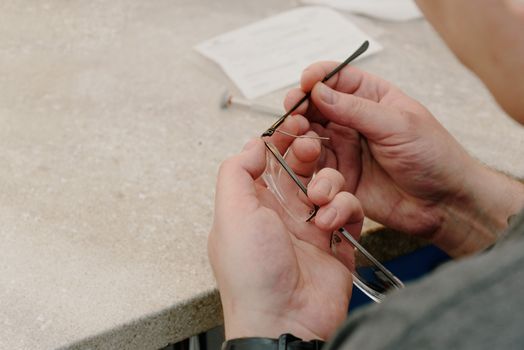
Photo by Ksenia Chernaya / Pexels
The Hidden Truth About Titanium Alloy Grades
Not all titanium is created equal. Most budget titanium frames use Grade 1 commercially pure titanium (99.5% pure) or low-grade alloys that sacrifice strength for cost savings. Premium frames utilize Grade 5 titanium alloy (Ti-6Al-4V), which contains 6% aluminum and 4% vanadium, delivering 130,000 PSI tensile strength—nearly double that of pure titanium.
The telltale difference lies in flexibility testing. Genuine Grade 5 titanium temples can bend 90 degrees without permanent deformation. Inferior alloys show stress whitening or micro-fractures at just 45-degree bends, creating invisible weak points that lead to sudden failures.
Temple Hinge Engineering: Where Most Frames Fail
The temple-to-frame connection bears 80% of daily stress during opening and closing motions. Cheap titanium frames use simple barrel hinges with steel pins—creating a galvanic corrosion problem where dissimilar metals interact with skin oils and moisture.
Critical Hinge Design Features
| Hinge Type | Durability Rating | Failure Point |
|---|---|---|
| Standard 5-barrel | 12-18 months | Pin corrosion |
| 7-barrel titanium | 3-5 years | Screw loosening |
| Spring-loaded | 5-8 years | Spring fatigue |
| Memory metal hybrid | 8+ years | Minimal wear |
Premium manufacturers like those behind memory metal frames address this by using titanium-coated pins or integrated spring mechanisms that distribute stress across multiple contact points.
Manufacturing Shortcuts That Cause Temple Breaks
The most common failure occurs at the temple's stress concentration point—typically 15-20mm from the hinge connection. This happens when manufacturers skip the stress relief annealing process, a heat treatment that eliminates internal molecular tensions created during forming.
Red Flags in Titanium Frame Construction
- Visible weld lines: Indicates pieces were joined rather than formed from single titanium sheets
- Sharp internal corners: Create stress risers that propagate cracks under repeated flexing
- Inconsistent wall thickness: Thin sections fail first under normal wear patterns
- Poor surface finishing: Micro-scratches become crack initiation points over time
Quality frames like the Clark model feature gradual thickness transitions and radiused corners that distribute mechanical stress evenly across the temple length.
The Corrosion Factor Italian Customers Miss
Italy's coastal humidity, particularly around Rome's Mediterranean climate, accelerates galvanic corrosion in mixed-metal titanium frames. When manufacturers use steel screws or brass components alongside titanium, electrochemical reactions weaken joint integrity within 6-12 months.
Pure titanium frames resist this completely due to titanium's natural oxide layer, which self-heals when scratched. However, identifying truly pure titanium versus titanium-plated alternatives requires specific testing methods most consumers can't perform.
Professional Temple Stress Testing Methods
Opticians use standardized flex tests to evaluate titanium frame durability before stocking inventory. The ISO 12870 standard requires temples to withstand 25,000 opening/closing cycles—equivalent to 5-7 years of normal use—without permanent deformation.
DIY Durability Assessment
Before purchasing, gently flex the temple arms while observing these indicators:
- Smooth resistance: Quality titanium provides consistent spring-back across the entire flex range
- No creaking sounds: Audible stress indicates internal structural issues or poor joint tolerances
- Even color distribution: Stress-whitening suggests inferior alloy composition or inadequate heat treatment
- Precise hinge action: Premium hinges maintain smooth operation through 180-degree movements
Why Memory Metal Outperforms Pure Titanium
Shape-memory alloys, particularly nickel-titanium (Nitinol), demonstrate superior fatigue resistance compared to conventional titanium. These materials can undergo millions of deformation cycles while returning to their original shape—eliminating the progressive loosening that plagues standard titanium hinges.
The Speed frame design incorporates this technology in temple construction, allowing extreme flexibility without permanent set. This proves particularly valuable for active wearers who subject their glasses to frequent impacts and temperature variations.
Lens Weight Impact on Temple Longevity
Heavy prescription lenses create cantilever loading on titanium temples, with each gram adding measurable stress at the hinge connection. Progressive lenses, particularly those exceeding 1.67 index thickness, can double the mechanical load compared to single-vision alternatives.
The solution involves matching frame geometry to lens requirements. Rimless designs eliminate front-frame weight while distributing lens loads directly through the nose bridge, reducing temple stress by up to 40%.
Prescription-Specific Frame Selection
| Prescription Range | Recommended Frame Style | Temple Material |
|---|---|---|
| -2.00 to +2.00 | Standard full-rim | Grade 1 titanium acceptable |
| -4.00 to +4.00 | Reinforced hinges required | Grade 5 titanium minimum |
| Above ±4.00 | Memory metal preferred | Nitinol or flexible hybrid |
| Progressive lenses | Full-rim with wide temples | Spring-loaded hinges essential |
Regional Factors Affecting Titanium Frame Performance
European customers, particularly those in humid regions like coastal Italy or industrial areas around Turin, face accelerated wear patterns due to environmental factors. Salt air, industrial pollutants, and temperature cycling create conditions that test titanium's corrosion resistance limits.
Proper maintenance becomes crucial: weekly cleaning with pH-neutral solutions, avoiding harsh chemicals, and periodic professional adjustments extend frame life significantly. Many premium manufacturers now include protective nano-coatings that enhance titanium's natural corrosion resistance.
Cost-Quality Correlation in Titanium Frames
Authentic Grade 5 titanium costs manufacturers €15-25 per frame in raw materials alone, before processing and assembly. Frames retailing below €100 typically use titanium plating over steel cores or low-grade alloys that compromise long-term durability.
The price-performance sweet spot for genuine titanium frames falls between €150-300, where manufacturers can afford proper alloy selection, precision machining, and quality control processes that prevent premature failures.
Professional Repair vs. Replacement Decisions
Temple breaks in quality titanium frames often merit professional repair rather than replacement. Laser welding techniques can restore structural integrity in Grade 5 titanium, though repairs typically cost 40-60% of new frame prices.
However, repeated stress failures indicate fundamental design flaws that repair cannot address. In these cases, upgrading to memory metal or flexible titanium alternatives prevents recurring issues.
Finding Reliable Titanium Frames
Quality titanium eyewear requires careful sourcing from manufacturers who invest in proper materials and engineering. Lensdy, based in London at 128 City Road, EC1V 2NX, offers over 200 frame styles including premium titanium and memory metal options, with prescription lenses starting from £29.
Their collection includes rigorously tested designs like the Delicate Silver, which demonstrates how proper titanium engineering eliminates common failure modes. With free standard shipping across Europe and delivery to Italy within 4-8 business days, customers can access professional-grade eyewear without the traditional markup.
The key lies in choosing frames from manufacturers who prioritize material quality over cost reduction, ensuring your investment delivers years of reliable performance rather than frustrating breakdowns.
Ready to experience properly engineered titanium frames? Browse lensdy.com to discover durable eyewear that stands up to daily wear and delivers the longevity titanium promises.
Frames mentioned in this article


