

Can Scratched Glasses Lenses Be Repaired? Mostly No
That hairline scratch in the middle of your left lens is the one you notice every time you look up from your phone.
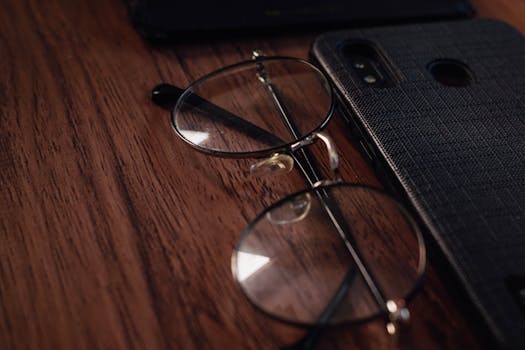
Photo by Wallace Chuck / Pexels
Usually, no. Scratches on modern plastic lenses sit in a thin hard coat or anti-reflective layer, and nothing you can apply at home removes them. Fillers and polishes only hide faint marks for a few days, or make them worse. If a scratch catches your fingernail or sits in your central view, replace the lens.
How can you tell how bad a scratch really is?
Run a fingernail lightly across the mark. If it catches, the scratch has cut through the coatings into the lens material, and no home method will remove it. If your nail glides over it, you are probably looking at a smear, dried residue or a worn patch of coating. Most plastic lenses carry a hard coat, far thinner than a hair, and often an anti-reflective coating on top. Those layers are what you see scratching, and rubbing cannot rebuild them. Next, check the position. Hold the lens against a dark background under a lamp and tilt it. A mark near the edge is mostly harmless. As a rule of thumb, anything within about 10 mm of the point you look through most will bother you daily. Smears move when you wipe them with a clean microfibre cloth and a drop of lens-safe soapy water. Real scratches do not.
Three quick tests:
- The fingernail test: does it catch?
- The lamp test: do you see bright lines against a dark background, or a hazy smear?
- The look-through test: does it show up when you read a line of text or look at a streetlight?
One more thing generic advice skips: crazing. If your lens shows a web of tiny cracks, like dried mud, it is not a scratch. The coating and the lens expand at different rates when heated, and the coating splits. A hot car dashboard, a sauna or a hairdryer held too close are the usual causes. Crazing cannot be repaired either.
Shop the frames in this guide


Do toothpaste, baking soda and scratch fillers work?
No. Toothpaste and baking soda are abrasives, and on a coated lens they grind through the anti-reflective layer and leave a cloudy patch around the original scratch. Fillers such as wax, car scratch remover or clear nail varnish work differently: they pack the groove with a material that bends light similarly, so the mark looks fainter. That effect is temporary. The filler wears off with the next clean, collects dust and can leave a smeary film that is harder to clean than the scratch ever was. Fillers can make a fine surface scratch less visible for a few days, but they cannot restore a damaged coating, and they do nothing for deep marks. Our view: skip them. You risk turning a small flaw into a large hazy area, and you still end up replacing the lens.
Home methods to avoid:
- Toothpaste, baking soda paste or any gritty polish
- Acetone, nail varnish remover or strong solvents, which can attack coatings and some frame materials
- Steam or hot water to “relax” the coating, which can cause crazing
- Kitchen paper and tissues, which are rougher than they feel
Can an optician polish or re-coat a scratched lens?
Rarely, and not for ordinary prescription lenses. Glass can be polished because it is hard, but nearly all modern prescription lenses are plastic. Polishing plastic removes material, which changes thickness and can shift the optical power slightly. It also strips the hard coat and anti-reflective layer, which then need re-applying in a lab. That is seldom offered for a single pair. So the realistic options are living with a minor mark or fitting new lenses. If your frame is still in good shape, ask your optician whether it can be re-fitted with new lenses, and what that would cost compared with a whole new pair. Also ask how old your prescription is, since you will need a valid one to order lenses. Buying a new frame with new lenses often costs about the same as re-glazing an old one, and you get fresh coatings on every surface.
When is replacing the lenses the smarter move?
Replace them when the scratch catches your fingernail, sits near the centre of your vision, or smears streetlights and headlights into streaks at night. Scratches scatter light, and in the dark that scattering is exactly what you notice. Progressive lenses are less forgiving still, because their usable zones are narrow and a mark in the corridor interrupts the very part you read through. A scratch you only see when you hunt for it, near the edge of the lens, can be left alone. Replacement is also a chance to fix what annoyed you about the old pair: a higher index such as 1.61 or 1.67 for a thinner, lighter lens if your prescription is strong, an anti-reflective coating to cut glare, or photochromic lenses so you stop carrying a second pair.
| What you see | Repairable? | What we'd do |
|---|---|---|
| Smear or residue | Yes, it is not damage | Rinse, soapy water, microfibre cloth |
| Faint hairline near the edge | Not needed | Ignore it |
| Mark that catches a fingernail | No | Replace the lens |
| Scratch in the central view | No | Replace the lens |
| Web of fine cracks (crazing) | No | Replace the lens, avoid heat |
If the frame has also seen better days, browse our prescription glasses collection. The Champagne and Frankfurt frames are two places to start if you want a fresh look along with new lenses.
How do you stop lenses getting scratched again?
Stop wiping dry lenses. Dust and sand contain quartz, which is harder than the coatings on plastic lenses, so a dry wipe with your shirt drags those particles across the surface like sandpaper. The habit that works: rinse the lenses under lukewarm tap water to float the grit off, add a drop of mild washing-up liquid, rub gently with your fingertips, rinse again and dry with a clean microfibre cloth. It takes about 20 seconds. Then keep the glasses somewhere safe. Most scratches happen in bags, pockets and on tables, not on your face. A hard case in your bag costs nothing compared with a lens replacement, and it also protects the frame from being bent.
- Never rest glasses lens-down on a table, even briefly.
- Keep them away from keys and coins.
- Do not leave them on a car dashboard or near a radiator.
- Wash your microfibre cloth regularly with plain detergent and no fabric softener. A gritty cloth scratches just as well as a shirt.
A scratch-resistant coating helps, but it is scratch-resistant, not scratch-proof. Handling habits matter more than any coating.
What should you do next with scratched glasses?
Do the fingernail and lamp tests first. If it is only a smear, clean the lenses properly and you are done. If the scratch is real and in your line of sight, fresh lenses are the honest fix. At Lensdy you can choose from 200+ frame styles, such as Prism or SkyAura, and add affordable prescription lenses in single vision or progressive, with options like anti-reflective coating, blue light filtering and photochromic. Shipping is free on orders over €59, and most orders arrive within 1–2 weeks. Keep your old pair as a backup while you wait, and check your prescription is current before you order.
Frequently Asked Questions
Can scratch repair kits fix glasses lenses?
Kits that rely on polishing compounds abrade the surface and remove the coating around the scratch, leaving a hazy patch. Kits that rely on filler hide the mark for a short time. Neither restores the lens, so we would not use them on prescription lenses.
Do scratches change my prescription?
A scratch does not change the lens power. It scatters light, which can cause glare, halos and a drop in clarity, especially at night. If your vision seems different, ask your optician to check your prescription rather than assuming the scratch is the cause.
Is a scratch-resistant coating the same as scratch-proof?
No. A hard coat makes the surface tougher, but grit, keys or a rough cloth can still mark it. Good cleaning habits and a case do far more than any coating.
Can I keep wearing glasses with a small scratch?
If the scratch is near the edge and does not distract you, yes. If it is in your central view, causes glare or leaves you squinting, replace the lens. Comfortable, clear vision is the point of the glasses.
Ready for a clear view again? Browse the full range at lensdy.com and build your next pair.